Key Takeaways
- Lipomas are benign lumps filled with fat. They can show up anywhere in the body, but you’ll frequently see them in the arms, neck, shoulders, back, and thighs.
- Liposuction is a minimally invasive procedure that will efficiently remove your lipomas. It also offers a less scarring alternative to traditional surgery.
- Ask a qualified healthcare provider if liposuction is a good approach for your particular lipoma. They’ll also assess your overall health and whether you are a candidate for the procedure.
- It’s important to be aware of the risks, such as infection and asymmetry. Follow post-operative care instructions to heal naturally.
- Patients should ensure that liposuction meets their expectations and goals by discussing them with their healthcare provider.
- The post-operative care plan will help you avoid complications and recover smoothly. It will also help you get the best results possible.
Wondering if liposuction can remove those lipomas?
Lipomas are soft lumps under the skin that can annoy you. Sometimes they arrive unannounced, like gatecrashers, and that can be a nuisance.
Liposuction offers a slick way to remove them, skipping the scalpel for less scarring. It’s fast, efficient, and leaves you with smooth skin.
How do you know if you’re the right fit? Let’s break down what makes liposuction a good option, who is eligible, and what to expect afterwards.
You’ll get the scoop on everything, plain and simple.
What Are Lipomas
That’s why it’s so important to understand lipomas.
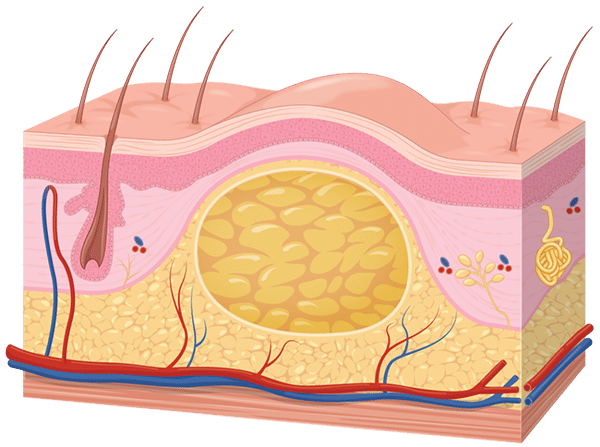
These are noncancerous lumps that form under the skin. These lumps, or lipomas, are typically harmless and consist of fatty tissue.
The one that we know about the most because it occurs in humans is mesenchymal tumors, and those are the most common type. Fortunately, they’re not linked to cancer.
Occasionally, a lipoma may need to be removed, particularly if it’s interfering with function or causing pain.
Definition of Lipomas
Lipomas are soft, fatty tumors embedded in the subcutaneous tissue (just beneath the skin). These benign growths are simply made up of adipose, or fat, tissue.
They’re also checked during a physical exam or with imaging techniques like an ultrasound. Because they’re encapsulated and well-defined, doctors can quickly identify them without mistaking them for something severe.
Characteristics of Lipomas
You may notice that lipomas feel soft or squishy when you press on them. They can even shift a little under the skin, and their surfaces are smooth with well-defined edges.
Typically, they appear on the torso, arms, and thighs, but they can occur anywhere.
Most lipomas average around 9 x 12 cm, with the first number showing the smallest dimension and the second the largest.
On the back, or dorsal, region, you’ll find approximately 30% of them.
Symptoms of Lipomas
For most of us, lipomas don’t cause any symptoms. They’re often just sitting there, silently hiding beneath the skin.
Some people may notice a lump, but it doesn’t hurt. When they are larger, they may press on nerves or tissues and cause discomfort.
If you notice any size or shape changes, it’s a good idea to have them looked at.
Diagnosing Lipomas
Checking for lipomas typically begins with a physical exam. If there is any ambiguity, doctors may refer to imaging methods such as MRIs. This approach allows them to better scrutinize deeper lipomas.
Sometimes, to make sure it’s not something else, like liposarcoma, getting the diagnosis right matters a lot. It informs the best treatment plan if liposuction is a good option, for example.
Liposuction for Lipoma Removal
If you have a larger lipoma on your body, liposuction is one option that works well.
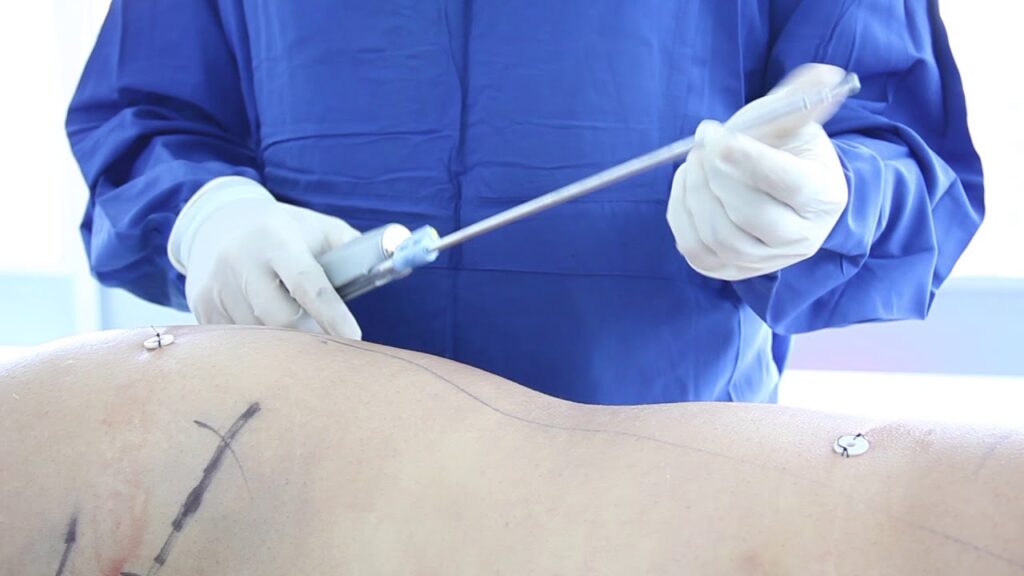
It’s a relatively non-invasive technique that uses suction to extract fat cells from a small incision. This approach minimizes scarring in comparison to the traditional excision method. That’s a huge plus if you don’t want any visible marks.
It’s especially suitable for big lipomas, which can be difficult to remove with conventional surgery.
1. Overview of Liposuction
Liposuction is a cosmetic procedure that can remove excess fat. It’s done using a method called tumescent liposuction, in which a solution is injected to decrease bleeding. Depending on the case, it can be done under local or general anesthesia.
Because it’s an outpatient procedure, you typically go home the same day, so recovery is fairly quick. Most people go back to their usual activities within a week. It’s wise to avoid heavy lifting for at least two weeks.
2. Benefits of Liposuction
There are plenty of perks with liposuction.
For starters, the scarring is minimal, which is a plus if you’re concerned about appearances. The recovery time is also sooner, getting you back to your routine sooner.
Liposuction removes lipomas and is highly successful in achieving this. In fact, 85% of his patients reduce to this size.
Surgical time is shorter than that of traditional surgery, and for those seeking cosmetic improvement, it’s a strong option.
3. Comparing to Traditional Surgery
When you compare liposuction to traditional surgery, which involves larger incisions, the differences are clear.
Traditional methods can result in longer recovery time and more visible scarring. There are risks of complications such as infection or bleeding.
With a low complication rate (just 3% regrowth), liposuction is a safer option for some lipoma cases.
Here’s a quick look at some recovery facts:
- Most patients return to normal activities in a week.
- Avoid strenuous activity for at least two weeks.
- Follow-ups are typically scheduled within a week of surgery.
Consultation and Candidacy
If you’re interested in liposuction to remove lipomas, take the first step by scheduling an initial consultation with an experienced surgeon.
This meeting can have a massive impact on your journey.
I can personally attest to this based on my experiences with Dr. Lowen. The guy comes highly recommended.
Reputable publications such as Harper’s Bazaar and Vogue have called him a “Top Plastic Surgeon.
This appointment is not a mere introduction, but the start of your treatment path.
The surgeon will consider the size and location of your lipoma. This assessment is important in deciding whether or not liposuction is a suitable treatment for you.
Dr. Lowen explained everything so clearly that it really put my mind at ease. He stressed you should talk about the goals of your treatment and what you can expect.
Initial Consultation Process
Here’s how the consultation typically goes.
First, the surgeon will review your medical history so you have a clear picture of your health. This step is critical because it allows the treatment to be customized for you.
A physical exam — and sometimes imaging — may be performed to take a closer look at the lipoma. This is also your golden opportunity to ask all those burning questions about the procedure and recovery.
I found it useful to mention any medications or health conditions that could impact the surgery. It’s just laying all the cards on the table, so there’s no question about it.
Criteria for Candidacy
Be a good candidate for liposuction with larger lipomas that lend themselves to this technique.
Your overall health has a huge influence here, and you must not have any serious medical conditions.
Having realistic expectations about outcomes and recovery is key.
For those of us with several lipomas, a customized treatment plan is required.
For me, Dr. Lowen’s small-incision approach was a major deciding point.
Evaluating Health Conditions
Before proceeding with liposuction, assessing your current health conditions is non-negotiable.
Conditions like obesity or diabetes make things trickier.
It is critical that you tell your surgeon about all medications, especially blood thinners.
This is where Dr. Lowen shines. He reviews individual risks, examining your health history to ensure the safest possible outcome.
- Only 3% of liposuction treatments see lipoma regrowth. You’ll have it done on the same day because only local anaesthesia is necessary for lipoma removal. Developed in the 1980s, the method involves a special solution injected into the area.
Risks and Post-Operative Care
Understanding Potential Risks
Liposuction is typically a safe procedure for removing lipomas, but it does carry some risks.
These may include bleeding, infection, scarring, and seroma formation, which is fluid accumulation at the surgical site.
In about 8.7% — like with T.T and I.G. — doctors had to do aspiration. This procedure effectively addressed the issue of seroma formation.
Sometimes, complications stem from the anesthesia or the surgical techniques themselves, so finding a good surgeon is important. An experienced professional can really help lower these risks.
It is equally important that patients need to be aware of potential side effects and be prepared for them. That awareness can help a lot with dealing with any unexpected hiccups.
Managing Post-Operative Care
It’s important to take good care of yourself post-surgery.
Here’s a quick guide to help manage post-op care:
- Keep the incision site clean and dry to keep infections away.
- Over-the-counter pain meds can ease discomfort, which is usually light to moderate and doesn’t disrupt daily life.
- While most folks get back to their normal activities within a few days, it’s wise to skip heavy lifting or intense workouts for a couple of weeks.
- Watch the surgical area for changes. Signs of issues peak in the first week, then begin to fade over the next month.
Long-Term Recovery Tips
Once the acute recovery period ends, there are things you can do to help your body heal well.
- Eating well and staying active can speed up healing.
- Try light stretching and easy exercises when you feel up to it.
- Keep an eye on the surgical area. If anything feels off, it’s worth speaking to your doctor.
- These are vital to check your progress and catch any issues early.
Remember, scarring will continue to improve as your skin makes more collagen over the next two to three months.
This recovery time is relatively shorter, allowing you to resume your routine sooner.
Conclusion
Liposuction for lipoma removal sounds like a solid choice if you’re dealing with these pesky lumps. It provides a less invasive option with rapid recovery. I’d say it is worth checking out if you fit the bill.
Just make sure you talk with a qualified surgeon. They’ll help you determine if this is the right move for you.
Remember, every treatment has its ups and downs, so weigh them carefully.
Stay educated, stay vigilant, and take charge of your health choices.
If you’re curious or think liposuction might be your answer, schedule a consult. You’ll even find the answer to those pesky lipomas.
Make that leap and see what you can do.
Frequently Asked Questions
What are lipomas?
Lipomas are benign fatty tumors under the skin. They’re soft, moveable, and typically painless. They commonly occur on the neck, shoulders, back, abdomen, arms, and thighs. While benign, they can be cosmetically removed or if they cause discomfort.
Can liposuction remove lipomas?
Answer: Yes, lipomas can effectively be removed by liposuction. It’s minimally invasive and uses suction to remove fatty tissue. This method can be less invasive than traditional excision and has quicker recovery times.
Who is a suitable candidate for liposuction to remove lipomas?
Ideal candidates are in good health and have lipomas that are localized. The most important part in determining whether one is suitable is a consultation with a qualified surgeon. Patients need to have realistic expectations and understand the limitations and potential risks of the procedure.
What are the risks of using liposuction for lipoma removal?
Risks include bruising, swelling, infection, and scarring. There is also a risk of incomplete removal and the need for additional treatment. Working with a knowledgeable professional helps reduce these risks.
How long is the recovery after liposuction for lipoma removal?
Recovery usually lasts a few days to a week. You may experience mild discomfort, bruising, and swelling. Following post-operative care instructions from your surgeon ensures a smooth recovery process.
Is liposuction for lipoma removal covered by insurance?
Insurance coverage varies, and it could include a costly out-of-pocket expense. Cosmetic procedures are typically not covered. If the lipoma is painful or affects function, insurance may cover it. Consult your provider to understand your policy.
Why choose liposuction over traditional surgery for lipoma removal?
Liposuction is less invasive, provides a quicker recovery, and leaves smaller scars. It can be more appropriate for multiple or larger lipomas. As always, talk to an experienced surgeon to see what’s best for you.