Key Takeaways
- Retatrutide insurance coverage options Retatrutide is a GLP-1 drug for obesity and metabolic health, with coverage possibilities differing based on insurer and legislation.
- Medicare coverage for retatrutide could include various requirements such as eligibility, prior authorizations, and Part D versus Advantage Plan differences that affect out-of-pocket expenses.
- Commercial insurance plans vary widely in their coverage of GLP-1 medications, so it is important for patients to examine their plan specifics and options available through employer coverage.
- Legislative and societal factors still play a role in insurance coverage for obesity treatments. This emphasizes the impact of advocacy and potential policy advancements.
- Patient assistance and discount programs through pharmaceutical companies and non-profits can ease the retatrutide financial strain.
- They can increase their likelihood of insurance coverage by keeping a solid paper trail and being aggressive in engaging providers and insurers during appeals.
Retatrutide insurance coverage options can vary based on your health plan, local regulations, and the medicine’s approved indication. Most plans require medical necessity documentation prior to assisting with payment.
Coverage will vary by country and provider, with some being more generous toward new drugs. Knowing the coverage basics helps you plan for costs and avoid surprises.
The following coverage for retatrutide sections explain what to anticipate and how to verify your options for retatrutide.
Understanding Retatrutide
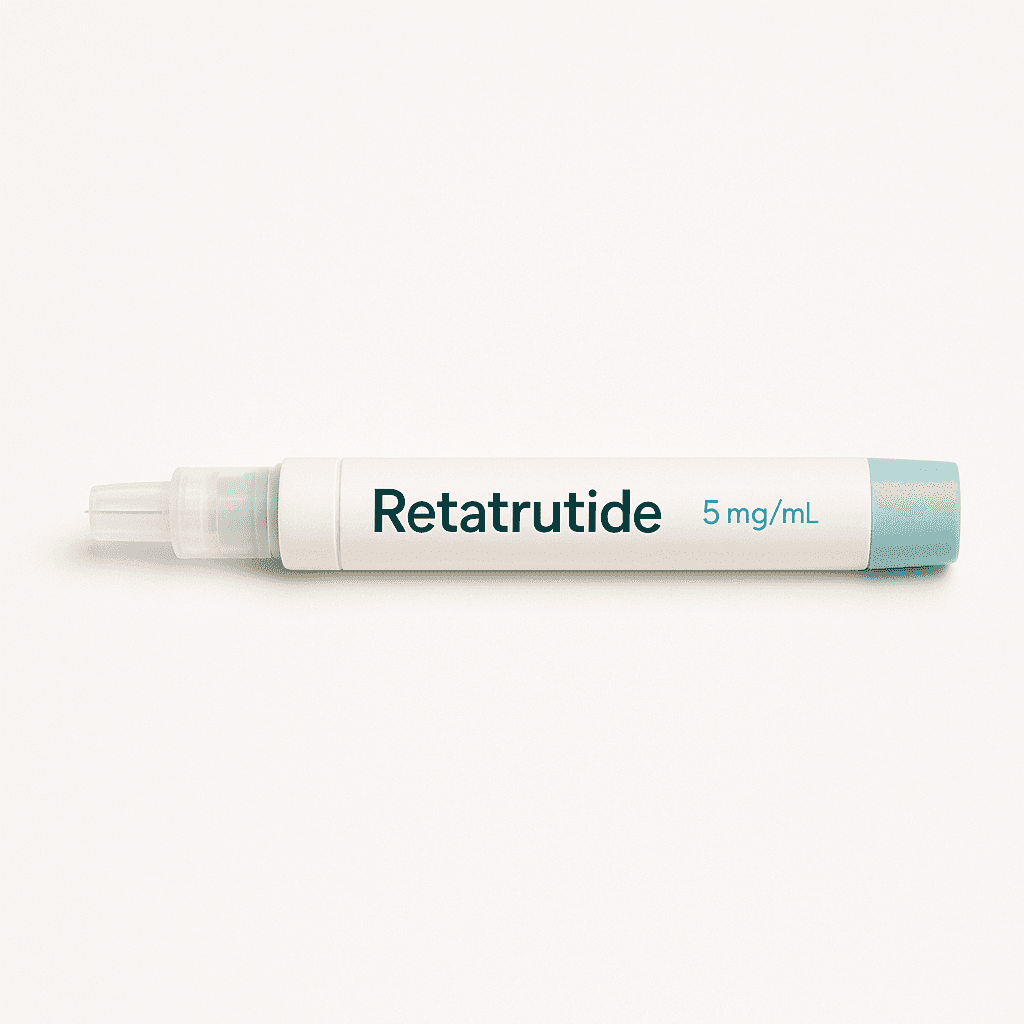
Retatrutide is a new drug under research for individuals who require assistance with weight loss and chronic health management. It targets three hormone pathways simultaneously: GIP, GLP-1, and glucagon. It acts by assisting the body to reduce blood sugar and digestion while decreasing appetite.
It is part of a class of medications known as GLP-1 receptor agonists. These are typically prescribed for obesity and type 2 diabetes. Retatrutide is notable in that it is multi-hormonal. For individuals dealing with obesity or metabolic conditions, it can translate to enhanced assistance in shedding pounds and maintaining weight loss.
Retatrutide demonstrated obvious effects in the studies. Individuals who received 12 mg of retatrutide for close to 68 weeks (approximately 15.5 months) shed an average of just under 29% of their initial body weight. For most, that translated to around 32 kg (71 lbs) lost.
These figures exceed those observed with previous generation weight loss medications. The primary advantages, besides shedding pounds, consist of enhanced hunger regulation and improved metabolic health, including blood sugar and cholesterol.
Retatrutide is not only for obesity. Studies are underway to see if it could assist those with type 2 diabetes, MASH, chronic kidney disease, heart health, and joint issues in bigger bodies. This generalist emphasis implies it might someday be helpful to lots of people across the globe.
Retatrutide remains under investigation and isn’t yet FDA-approved. The last phase 3 trial wraps in early 2026, and with good results, approval could arrive in 2027. Its complete safety and side effect profile will become more evident as additional data is accumulated.
Similar to other GLP-1 drugs, retatrutide can cause nausea, vomiting, or stomach upset.
| Feature | Details |
|---|---|
| Key Benefits | Weight loss (~24-29%), appetite control, better blood sugar, possible heart/liver benefits |
| Side Effects | Nausea, vomiting, diarrhea, stomach upset, possible rare serious risks |
| FDA Approval Status | Not approved; phase 3 trial ends 2026; possible approval in 2027 |
If it’s approved, retatrutide will almost certainly be deemed a Tier 4 specialty drug by insurers. This implies that individuals could encounter expensive monthly fees, typically $100 to $500 or 20 to 40 percent of the purchase price per month.
Most plans will mandate that people try other drugs first, such as tirzepatide or semaglutide, before covering retatrutide. Weight loss drugs are rarely covered by insurance plans, with just a quarter covering them in 2023, but this may increase over the next couple of years.
Medicare Coverage
Medicare coverage for retatrutide varies based on individual eligibility, plan options, and existing legislation. Beneficiaries have age or disability requirements, usually being 65 years or older or eligible due to disabilities. Original Medicare and Medicare Advantage provide separate options for coverage of GLP-1 medications such as retatrutide.
Medicare Part D subscribers can reach these drugs if they are on the plan’s formulary. Scoped alternative (EA) Part D plans, which cover around three quarters of all beneficiaries, occasionally have more access than basic plans. Not all plans cover all GLP-1s, and coverage details can differ significantly.
Medicare places restrictions like prior authorization and step therapy for GLP-1 drugs. Prior authorization requires prescribers to submit clinical documentation prior to approval. Step therapy could require patients to try less expensive options before retatrutide. These barriers can delay entry and create ambiguity for patients and doctors.
Medicare coverage is influenced by dynamic policy and CMS guidance, with yearly updates outlining benefit criteria and drugs included.
- Beneficiary pays monthly Part D premium (varies by plan).
- Annual deductible (up to a CMS-set maximum).
- Copayment or coinsurance for each prescription with rates determined by the plan.
- Coverage gap (“donut hole”): higher out-of-pocket costs occur after a set spending threshold.
- Catastrophic coverage phase: reduced cost sharing occurs after total out-of-pocket costs surpass a set limit.
1. Part D Rules
Medicare’s Part D plan covers many prescription drugs, including a handful of GLP-1 drugs like Ozempic, Mounjaro, Rybelsus, and Wegovy for approved indications. Plans have to cover drugs on their formulary for reimbursement, but each formulary differs and may restrict which GLP-1 drugs are covered. Certain plans only cover these drugs for diabetes, not weight loss.
Copayments and coinsurance are key costs, and these amounts differ by plan and coverage phase. Once a year, you can change plans to fit your meds a little better. Make sure to check the plan’s formulary every year because it can change.
2. Advantage Plans
Medicare Advantage plans, available through private insurers, frequently package drug coverage and even provide additional benefits. These plans may cover GLP-1s more generously or with fewer restrictions than Original Medicare. Out of pocket costs, such as copays or coinsurance, can be lower with some Advantage plans.
Coverage criteria and drug lists vary between plans, so it’s good to review the plan’s materials before enrolling.
3. Legislative Hurdles
Existing legislation restricts Medicare’s capacity to cover retatrutide-type drugs for obesity exclusively. The Treat and Reduce Obesity Act of 2023 aims to fix this by expanding Part D to cover anti-obesity medications. Policy changes such as this one could help pave the way for expanded access to GLP-1 medications.
Advocacy groups are still pushing forward. Coverage for weight loss is currently limited. Access will be determined by legislation.
4. Dual-Purpose Drugs
Dual-purpose drugs simultaneously address multiple conditions, for example diabetes and obesity. Retatrutide hits both — weight loss and metabolic health — which is valuable for individuals with overlapping needs. Insurance plans are often reluctant to cover these medications solely for weight loss.
When one drug plays multiple roles, insurers might have to revise their guidelines. If more of these dual-purpose drugs were covered, healthcare costs at large could actually go down by decreasing associated complications.
5. Future Outlook
Recent appetite to broaden GLP-1 coverage as new clinical trials underline benefits. Policymakers review clinical trial findings and public health requirements to determine subsequent regulations. With obesity increasing as a priority, insurance plans could extend coverage for medications such as retatrutide.
Medicare coverage, changes in policy and demo projects under 402(a)(A) could change the market. Medicare coverage means more access and less cost.
Commercial Insurance
Commercial insurance plans are the leading form of payment for many people’s prescription drugs, including new weight loss drugs such as retatrutide. Coverage for these kinds of drugs is evolving rapidly. More insurers limit or drop coverage for weight loss drugs, and the rules they use can be hard. Many plans lump retatrutide in with the other GLP-1 drugs, and those hurdles can be difficult to clear.
Commercial Insurance Coverage for retatrutide varies by individual insurance plan. Some plans provide partial or complete coverage. The majority currently maintain a series of steps patients need to complete prior to paying for the medication. For example, insurers can request prior authorization. This requires your doctor to demonstrate why you require the drug before the plan will cover it. More than 88% of those with coverage for weight loss drugs have to do this.
Some might have to attempt and try other treatments first, known as step therapy. Copays can be high, and some plans have people pay a large portion of the drug cost. These barriers may prevent individuals from initiating or continuing retatrutide.
It’s becoming more common for plans to exclude weight loss drug coverage. By 2025, 51% of commercial plans will have removed tirzepatide, another GLP-1 drug, and this is spilling over to other drugs such as retatrutide. CVS Caremark, one of the largest pharmacy benefit managers, has already excluded Zepbound, another GLP-1, from its formulary. That indicates insurers are concerned about costs spiraling upward and could continue to trim coverage for these drugs.
It’s important to review your individual policy for specifics. Every insurer writes their own rules about GLP-1 drugs. Some permit use of manufacturer savings cards which can reduce the cost to $25 to $150 a month for qualifying individuals. Even with savings cards, strict plan rules can still block or restrict access.
Employer plans can impact access. Employers pick what drugs to cover, and can even place additional restrictions, like tougher step therapy or higher copays. Because employer plans are so specific, it’s entirely possible that two people with the same insurer could have vastly different coverage for retatrutide.
This is why it’s important to check with your plan or HR to inquire about coverage, out-of-pocket expenses, and what steps you need to take.
| Insurance Plan Type | Coverage for Retatrutide | Barriers to Access | Cost-Saving Options |
|---|---|---|---|
| Standard Commercial Plan | Rare, often excluded | Prior auth, step therapy | Manufacturer card (if allowed) |
| Employer-Sponsored Plan | Varies by employer | May add strict rules | Copay assistance (sometimes) |
| Premium/High-Tier Plan | Sometimes partial | High copay, prior auth | Rare, depends on plan |
Navigating Denials
Insurance denials for retatrutide occur for various reasons, and being prepared to handle them can make a significant difference. Denials tend to be triggered because the drug is new, off-label use, or not yet on the insurer’s preferred list. Other causes could be expense, lack of clinical evidence, or protocols such as step therapy and formulary restrictions.
Step therapy means you could be required to try other drugs first. A denial is not the end. Almost every insurer permits you to dispute their decision via an appeal.
Offering a straightforward way to appeal denials really helps to fluid the process and reduce bottlenecks. Identifying why you were denied is the initial action. When dealing with denials, always review the denial letter to identify the specific reason, such as lack of medical evidence, step therapy, or the drug not being on the list.
Addressing the exact problem identified by the insurer is crucial. For instance, if the denial is because of lack of clinical evidence, attach published studies or updated guidelines demonstrating why retatrutide is the ideal choice in your situation. If cost is a concern, including evidence of failed lower-cost treatments can assist.
Thorough record keeping is key to every appeal. Your doctors should draft a comprehensive letter outlining the medical necessity of retatrutide for your health. Treatment history, lab results, side effects, and any flunked drugs should accompany your appeal.
Add in a new prescription for a separate diagnosis, if you have one, and it can sometimes turn a full denial into an approval. The more comprehensive your case, the greater your likelihood of approval.
Some practical steps to take when appealing a denial for retatrutide include:
- Check the denial letter for the stated reason
- Compile all medical records, test results, and previous drug history.
- Ask your doctor for a letter of medical need
- Attach peer-reviewed studies or clinical guidelines
- Note any failed therapies or allergies to other medicines
- Use drug manufacturer coupons or savings cards to save on costs.
- Keep copies of all paperwork sent and received
- Contact your insurer often to track the appeal’s status
- Keep in contact with your doctor for updates or additional forms.
While the majority of appeals receive a determination within 30 days, urgent matters may be expedited in as little as 72 hours. If your appeal is denied again, you can request an external review by an outside expert unaffiliated with your insurer.
Others swear by persistence and follow-up to melt a denial.
Affordability Programs
Access to retatrutide and other medications can be a combination of insurance coverage, patient assistance, and alternatives. These programs are important to know because they help patients and providers identify ways to keep treatment costs down.
Pharma patient assistance programs can often assist those who qualify by income, insurance, or need. These programs could be for the entire amount or provide meds at a discounted cost. For instance, top drugmakers usually have online application forms and customer service reps on hand to walk patients through. Some programs are on yearly renewal, others you need to reapply after a certain period.
To these patients, these programs are essentially the difference between starting treatment or postponing due to expense. They’re valuable, but just 24% of chronically ill patients are aware these resources exist, highlighting the need for additional awareness efforts.
Discount programs like manufacturer savings cards function by providing a flat price reduction for each fill. It can assist with co-pays or even offer a fixed monthly payment; in some cases that’s just $299 a month for a drug. Direct-to-consumer services lower prices when insurance won’t cover the drug.
Most of these online platforms partner with licensed pharmacies and provide the medicine generally at a cheaper rate than retail channels. Other insurers, particularly self-funded players, are broadening access to weight loss medications, with coverage anticipated to increase from 25 percent in 2023 to 43 percent in 2024.
Non-profits are yet another way patients get help to pay for weight loss drugs. Some even provide one-off grants, ongoing support, or link patients to advocacy pots that assist with medical bills. Some non-profits provide assistance for certain medications or diseases, while others provide aid for access to any chronic medications.
These alternatives are especially helpful for individuals who might not be eligible for government assistance or whose insurance does not cover obesity medications. Medicaid coverage for obesity drugs is determined on a country or regional basis. Diabetes medications with weight loss benefits are typically covered under more general public health plans.
For patients who can’t use their insurance or afford brand name drugs, compounded drugs are another avenue. These are made by licensed pharmacies to resemble the active ingredients of approved drugs and can be cheaper. Compounded drugs are an alternative when availability, cost or coverage puts other treatments out of reach.
The recent surge in GLP-1 prescriptions, which increased sevenfold over five years and is driving gross spending to nearly $9 billion in 2024, indicates strong demand and a growing requirement for additional payment mechanisms for these drugs.
Patients should explore each of these options: patient programs, discounts, non-profit assistance, and compounded drugs to discover which option best fits their needs and budget.
The Broader View
Insurance coverage for obesity treatments, including retatrutide and other newer drugs, is influenced by a combination of medical, economic, and social considerations. As a triple-agonist, retatrutide can be expected to encounter even more challenging access barriers than earlier drugs in the category. On the broader scale, health insurance policies are instrumental in how individuals address chronic conditions such as obesity. Policy restrictions and expenses tend to be an impediment.
The landscape of GLP-1 drugs and obesity treatments is confusing. More of us are looking for these drugs—prescriptions have increased sevenfold since 2019, and spending per prescription hit $1,000 in 2024. Fifty-one percent of commercial plans block tirzepatide, and retatrutide will likely be even worse or more restrictive. When these drugs are covered, they’re typically in Tier 4, which means higher out-of-pocket costs.
Most insurers mandate prior authorization, step therapy, or both. Patients have to exhibit a high BMI of 35 or greater, demonstrate that they’ve attempted lifestyle modifications, and occasionally have to try and fail less expensive drugs first. If forms are incomplete or additional documentation is required, two to four week delays are not unusual.
Robust health insurance matters for those with a chronic illness. For obesity, this implies not just covering the drugs, but backing long-term care and tracking. Without robust insurance engagement, a lot of patients simply can’t afford these treatments, which not only constrains their therapeutic choices but can result in increased health expenditures down the road.
Various countries and cultures perceive obesity in different manners, and this influences insurance coverage. In certain cultures, obesity is perceived predominantly as a lifestyle choice, prompting insurers to classify obesity medications as lifestyle drugs instead of essential medical care. Indeed, other countries treat obesity as a multifactorial disease due to genetic, environmental, and health factors, leading to more comprehensive insurance and public funding for treatments.
Cost is a major consideration across the board. Numerous states and countries are now taking steps to restrict coverage because the steep and increasing price of GLP-1 medications is perceived to be unsustainable. While the coverage is higher where there is less stigma and people can be outspoken in demanding better access, it is more limited where stigma is high.
Government roles in drug coverage and clinical trials are minor. The National Library of Medicine has trial listings, but doesn’t review or approve them. Medicaid and Medicare are expected to consider new coverage models for drugs such as retatrutide, but these won’t launch until 2026 or later, with opt-ins needed by early 2026.
Continued access advocacy is required for effective obesity treatments. Patient groups, health experts, and policy advocates are striving to change how insurers and governments view obesity and its treatments.
Conclusion
Retatrutide can provide new hope for many who need weight or diabetes assistance, but insurance regulations and expenses frequently delay things. Folks have varying obstacles with Medicare, work plans, or out-of-pocket. Some receive assistance through copay or patient assistance programs, while others appeal or explore alternatives. Real stories demonstrate that not everyone has equal access to care. Check with your provider or an advocate to keep up with changes. Inquire about updates and assistance that may suit you. For additional assistance, discuss with your physician or insider. Stay informed, advocate, and seek out new information so you can make the most informed decision for your health.
Frequently Asked Questions
What is retatrutide and how is it used?
Retatrutide is an investigational weight loss and diabetic drug. It is in trials right now. Healthcare providers decide its usage on a patient-by-patient basis.
Does Medicare cover retatrutide?
Medicare does not currently cover retatrutide. This is due to the fact that the drug has not yet been approved or is commercially available.
Will commercial insurance pay for retatrutide?
Very few commercial insurances cover retatrutide currently. Coverage can shift after approval and launch.
What should I do if my insurance denies coverage for retatrutide?
If your insurance refuses coverage, you can request your doctor to submit an appeal. Your insurance company can provide you with more information about their determination.
Are there affordability programs for retatrutide?
There are no formal retatrutide affordability programs as of yet. Once it’s approved, manufacturers could launch assistance programs.
How can I lower the cost of retatrutide?
Discuss with your provider about potential alternatives or upcoming discount programs. Once retatrutide becomes available, manufacturers could provide savings options.
Where can I find the latest information about retatrutide coverage?
Keep informed by visiting official health sites or consulting with your physician. They can offer you the most up-to-date insurance coverage news and patient programs.