Key Takeaways
- Liposuction for back fat results Liposuction removes stubborn back fat with small incisions and a cannula to suction targeted fat, producing smoother contours for bra rolls, upper and lower back, and flanks. Select a board-certified plastic surgeon for safe sculpting and realistic results.
- Anticipate initial swelling and bruising that can camouflage those early outcomes. Visible bulge reduction occurs within days and defined contour enhancement happens between 4 to 6 weeks.
- Final results generally manifest within three to six months, with longevity depending on maintaining a stable weight and lifestyle to avoid new fat deposits.
- Skin elasticity determines how well the skin tightens after fat removal. Energy-based methods and more youthful skin typically tighten better, while laxity can cause some residual loose skin.
- Recovery subsequent to early and late phases includes compression garments, pain medication, rest, and progressive activity. Skip vigorous exercise until your surgeon gives you the all-clear.
- Results vary by genetics, body type, previous surgeries or scarring, and realistic expectations. Talk about specialized technique choices including tumescent, ultrasound-assisted, or radiofrequency-assisted to optimize fat extraction and skin contraction.
Liposuction for back fat results in decreased volume and definition in areas treated. Common results are more even skin, a more slender shape, and noticeable centimeter loss in circumference around the torso. Outcomes vary based on the technique, the surgeon, and your recovery habits, such as wearing compression garments and refraining from strenuous activity. Most patients see their final shape at three to six months, with long-term maintenance tied to diet and the habit of exercise.
Procedure Overview
Back fat liposuction, a targeted area treatment, is the suction-assisted removal of excess fat deposits that do not respond to diet and exercise. This liposuction procedure will help rid of back fat by contouring the back through precise fat removal and sculpting. Most cases are day-case, allowing the candidate to go home the same day and recuperate with straightforward post-op care.
Target Zones
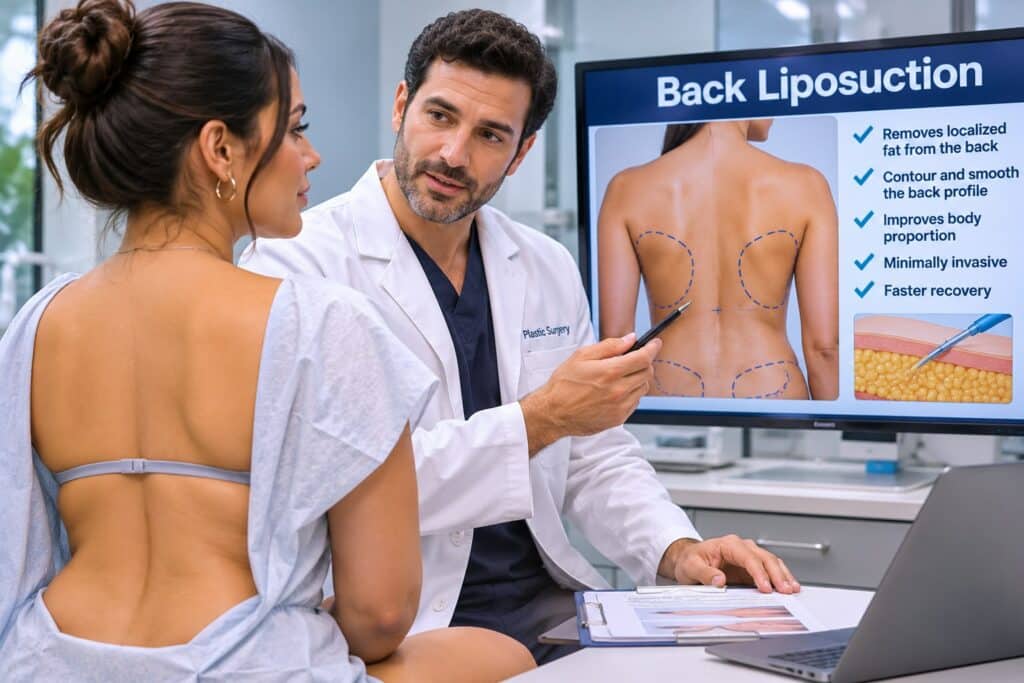
Surgeons often address common “problem areas” where back fat tends to collect. They evaluate fat quantity, skin texture, and the influence of the fat on overall silhouette. They demarcate target areas while the patient is both standing and supine. It often involves pinch tests and photo documentation to strategically design symmetric removal for natural-looking results.
- Bra rolls (under the shoulder blades and near the bra line)
- Upper back (between the shoulder blades and neck base)
- Lower back (above the waistline)
- Flanks or “love handles” on the sides of the torso.
Meticulous targeting enhances the body silhouette by eliminating unwanted pounds in areas that generate bulges and break the waist and back visual lines. Extracting fat from one zone can expose imbalance in another, so surgeons commonly map out multiple zones simultaneously for smoother transitions.
Primary Techniques
Tumescent, ultrasound-assisted, and BodyTite (radiofrequency-assisted) are popular options for rid of back fat extraction. The tumescent technique involves injecting a large volume of saline infused with local anesthetic and epinephrine, which swells the tissue, minimizes blood loss, and facilitates the removal of excess fat. This method frequently allows the liposuction procedure to be performed under local anesthesia with sedation. Ultrasound-assisted lipo uses ultrasonic energy to liquefy fat for easier suction, which is particularly effective in dense or fibrous regions. BodyTite combines suction and radiofrequency energy to liposuction and contract skin, which can be beneficial when skin laxity is mild.
Small incisions, typically 3 to 4 millimeters, are made in natural creases or under the bra line to conceal scars. Surgeons insert small tubes called cannulas through these incisions and manually slide them back and forth while suctioning out the adipose tissue. Power-assisted equipment can move the cannula automatically to enhance precision and reduce surgeon fatigue. Energy-based tools may also be included to assist with liberating fat and enhancing skin tightening, but they must be used cautiously to prevent thermal damage.
Anesthesia options range from local with sedation to general anesthesia based on the volume of extraction and patient preference. All patients require a responsible adult to drive them home. Post-procedure, you will experience swelling, bruising, and mild discomfort during the recovery period, with final results naturally emerging as the swelling subsides over weeks. Compression is usually worn for six weeks, and the cost depends on the volume of fat extracted and anesthesia used.
Visual Outcomes
Liposuction for back fat results focus on refinement, not on perfection. This liposuction procedure anticipates more contoured, smoother lines and less lumps, helping to rid of back fat effectively. The ultimate look is influenced by your skin’s resiliency, fat volume removed, and the surgical method used. Patients typically note a more toned back profile as healing progresses, influenced by anatomical variations and adherence to the treatment plan.
1. Immediate Changes
Swelling and bruising tend to obscure final results immediately following the liposuction procedure. There is some visible reduction in unwanted fat rolls and bulges within days, but early photos can deceive if the lighting and pose shifts a bit. Compression garments reinforce new shapes and reduce swelling, enabling the skin to adhere to underlying tissues. While discomfort during the treatment plan is usual and can restrict motion, initial fat loss indicators become evident despite the soreness.
2. Midpoint Progress
Swelling gradually subsides and enhanced body contour emerges over a period of weeks. It’s important for confidence-building to see the visual outcomes from the liposuction procedure. Compare before-and-afters at the 4 to 6 week mark to track real change and keep lighting, camera angle, and pose consistent to avoid photo trickery. Make a basic timeline or table to record measurements, pictures, and clothing fit. Many folks see their clothes fitting differently before they appear ‘photo ready’ as ongoing healing and targeted area fat-cell drop-off sculpt the visible result over this time.
3. Final Profile
Final outcomes from the liposuction procedure usually become apparent three to six months after surgery. These visual results provide long-term benefits, such as a toned, more tapered back and reduced or eliminated bra rolls. Maintaining a stable weight is critical for keeping these results, as there are fewer fat cells in the targeted area, making it harder for new fat to settle there. However, significant weight gain can change the outcome.
4. Skin Retraction
Skin elasticity is the primary component in redraping following a liposuction procedure for fat removal. Young or fortunate individuals with terrific elastic skin often experience the best retraction, as elastic skin redrapes more like tailored cloth and appears natural. Although energy-based approaches might provide additional tightening as they heal, they don’t guarantee results. Those with poor elasticity may be left with loose skin after large-volume removal and may require follow-up treatments to target excess fat deposits.
5. Long-term Stability
Fat cells extracted during the liposuction procedure don’t come back, promoting permanent body contour enhancement. A healthy lifestyle, including diet and exercise, helps to avoid new fat deposits in the targeted areas. Watch for weight swings, as big changes can transform the outcome even years down the line. The liposculpture technique matters; using a tube called a cannula and a crisscross suction method can lower the 9% risk of contour deformity reported in some series.
Recovery Timeline
Back liposuction recovery progresses through stages, starting with the control of swelling, bruising, and pain as the body begins its repair. In the later weeks and months, the focus shifts to monitoring and the gradual settling of body contour, especially in the targeted area. Full recovery can take three to six months, with noticeable gains occurring within weeks, while the final adjustments may take up to a year.
Early Phase
The first few days post-surgery bring peak swelling and bruising, generally at its worst during the first week. Patients typically experience a moderate amount of pain and soreness, with prescription pain medication used during the initial few days to maintain pain at a tolerable level. Tenderness can persist for several days after the stronger pain has subsided, and gentle, cautious movement facilitates blood circulation without overstraining healing tissues.
Compression garments are crucial immediately and for the first several weeks following the liposuction procedure. They control fluid accumulation, contour the targeted area, and minimize swelling. Wear them as the surgeon instructs, usually day and night initially, then during daytime only. Fit is important; anything too tight or too loose can cause folds or pressure points that interfere with the healing process.
Rest and restricted activity are key early. No heavy lifting, twisting, or strenuous exercise until cleared. The majority of patients require a minimum of one week off work. Those with desk jobs may be able to return within three days to a week depending on pain and mobility. Brief, regular walks prevent clot risk and promote circulation without agitating the incision.
Post-operative instructions should be followed closely. Take antibiotics if prescribed and complete them, and apply ice packs or elevation when indicated. Go to your follow-up visits so the surgeon can examine incisions and adjust care, ensuring that the treatment plan aligns with your recovery goals.
Late Phase
- Checklist of late-phase milestones: 1. Swelling and bruising will subside over a period of weeks, with the most visible change occurring within two to four weeks. 2. Back to light activity by two to four weeks; resume moderate exercise when cleared. 3. Continued contour improvement through three to six months, with possible subtle changes up to a year. 4. Scar care (massage or lymphatic drainage) if advised.
- Some swelling and numbness can continue for weeks. Sensation usually comes back slowly. Full nerve recovery can be slow.
- Wear compression if the surgeon recommends it periodically for up to the first 3 months to assist with shaping and comfort.
- Watch for unusual symptoms: increasing redness, rising pain, fever, or fluid leakage. Report these immediately. Routine follow-up aids in early detection of infection, seroma, or asymmetry and permits prompt intervention.
By the end of week two, the majority of patients feel much more like themselves and notice near final results from their liposuction procedure at three to six months, as the targeted area continues to soften and settle.
Influencing Variables
Liposuction results for back fat are influenced by a number of overlapping variables that impact both the immediate shape change and how well it is maintained. Here’s a quick summary of the key variables, with subsequent specialized discussion of genetics and body type, previous surgery or scarring, and expectations or individualized treatment plans. The liposuction procedure aims to target excess fat deposits, particularly in the back, to achieve a more contoured appearance.
- Summary of influencing variables:* Genetics and natural fat placement.
- General body shape and skin texture.
- Fat volume excised and initial body weight.
- Post-operative weight change, as putting on more than 10% of your body weight can erase the gains.
- Hydration, with 30 to 35 mL per kg per day recommended.
- Postoperative care, including compression garments and wraps.
- Activity, such as walking regularly and exercise adherence.
- Previous surgeries or scarring to the treatment area.
- Aftercare and surgeon technique.
- Time for swelling to subside and final contour, which can take 3 to 12 months.
Your genetics and body type play a significant role in where fat accumulates and how your skin reacts post fat removal. Apple shapes store fat differently than pear shapes, which determines which areas require more work. Skin elasticity matters as well; younger patients or those with good collagen may see smooth retraction after fat removal, while loose skin limits visible improvement. For example, two patients with equal fat removed can have different contours if one has firm skin and the other has lax skin. The latter may need combined skin tightening or may require adjustments in the treatment plan to rid of back fat effectively.
Prior surgeries or scarring can alter the technical challenge and outcome of the liposuction procedure. Scar tissue makes fat removal more difficult, may restrict cannula entry, and can lead to uneven fat removal or swelling that persists. A history of back surgery, liposuction, or large excisions needs to be mapped out, and occasionally staged, to ensure the best results. For example, a patient with prior dorsal scar may need small, targeted touch-ups and slower healing. The surgeon may adjust the technique to work around fibrotic zones, ensuring minimal damage to surrounding tissues.
Realistic expectations and individualized treatment plans shape patient satisfaction and long-term outcomes. Clear discussion about what liposuction can and cannot do prevents mismatch between desired and achievable results. Surgeon assessment should include weight stability, skin quality, medical history, and lifestyle. Practical steps to protect results include maintaining stable weight by avoiding a gain of more than 10 percent, drinking at least 30 to 35 milliliters per kilogram daily to help tissue recovery, wearing compression garments and special wraps in early weeks to aid skin retraction, and walking regularly soon after clearance to reduce risk and speed recovery. Swelling can last months, with primary shape seen at three to six months and refinements up to twelve months. Regular follow-ups let the team address prolonged swelling or contour irregularities early.
Risks Analysis
Liposuction for back fat carries a range of risks, from minor and common to rare but serious. The next sections lay out the main complications, how often they occur, and practical steps to reduce them. A clear pre-op exam and honest medical history are essential to judge individual risk and create a safe treatment plan for the liposuction procedure.
| Risk / Complication | Likelihood | Notes and examples |
|---|---|---|
| Infection | ~0.02% (serious) | Rare when sterility and antibiotics are used; signs include redness, fever, and increasing pain. |
| Blood clots / DVT / VTE | <0.02% | Risk increases with prolonged procedures, immobility, or a history of clotting. Prevention includes early ambulation and compression.
| Fat embolism | Less than 1 percent (serious) | Rare, it happens when fat enters the bloodstream. It can be fatal and needs immediate attention. | Prolonged swelling / seroma | Common | Swelling can persist for weeks to months. Drains or compression garments mitigate this. | Numbness / sensory change | Common, generally transient | Numb patches or changes in skin sensation typically improve in weeks as the nerves heal. | Contour irregularities / asymmetry | Common to moderate | Uneven removal, skin dimples, or ridges could require revision or touch-up procedures. | Skin laxity / sagging | Moderate | Most common if skin is inelastic. It could require skin-tightening or excisional surgery. | Anesthesia reactions | Uncommon | Such as nausea, local or general complications. Discuss anesthesia history with the team. | Nerve damage | Rare | It may be temporary or longer lasting. Careful technique reduces risk.

Contour irregularities or asymmetry are common to moderate issues that arise when there is uneven removal of fat. Skin dimples or ridges could require revision or touch-up procedures. Skin laxity or sagging is moderate and most common if the skin is inelastic. In such cases, skin-tightening techniques or excisional surgery may be necessary to achieve the desired body contour. Anesthesia reactions are uncommon, but discussing any history of anesthesia with the surgical team is crucial.
Uneven contours, loose skin, and patchy fat removal are the most common patient complaints following back liposuction. These issues often arise when the removal of excess fat is asymmetric, or when the surgeon’s technique does not match the patient’s anatomy. For instance, if the fat is removed aggressively from the lower back compared to the upper back, it can create a visible step-off. Good planning, marking while standing, and multiple small access incisions assist in achieving a more even result.
Numbness and persistent swelling are typical but tend to dissipate with time and appropriate aftercare such as compression, light massage and follow-up inspections. Nerve injury and anesthesia reactions are uncommon, and disclosure of medications, smoking and a thorough medical history is essential to minimize those risks. Choose a certified plastic surgeon, verify facility accreditation, and require a thorough consultation, which includes an exam, medical history, risk discussion, and written plan.
Clinical Insights
Clinical studies and case series demonstrate that liposuction consistently diminishes isolated back fat and contours the shape when performed by qualified surgeons. Proof of volume and circumference reduction at treated sites, with patient-reported aesthetic improvement, is common. A notable caveat from metabolic research is that removing substantial subcutaneous fat alone does not necessarily change metabolic markers. For instance, a 2004 New England Journal of Medicine study found that removing about 9 to 10 kilograms of abdominal fat did not improve insulin sensitivity, blood pressure, or cholesterol. That finding is relevant when counseling patients: liposuction is primarily a contour procedure and not a metabolic treatment.
Technical and device advances significantly enhance both safety and outcomes in liposuction. The tumescent technique, which employs small tubes called cannulas for precise aspiration, reduces bleeding and bruising. Energy-assisted tools, like ultrasonic or laser-assisted devices, can assist in loosening the back’s fibrous tissue and promote skin retraction in certain cases. Our incisions are usually 3 to 4 mm or less, strategically placed in natural creases to avoid noticeable scars. Anesthesia choices impact the patient experience; while many procedures utilize local tumescent anesthesia, some patients prefer general anesthesia or total intravenous anesthesia (TIVA) to minimize discomfort during the procedure.
Liposuction combined with other contouring steps often yields more harmonious results. For instance, back liposuction can be part of a comprehensive 360 liposuction approach that targets excess fat deposits in the abdomen, flanks, and bra roll for smoother transitions and a more complete midsection transformation. For patients with skin laxity, adjunct limited excision or energy-assisted skin tightening can potentially minimize residual sag. Postoperative care is crucial, as compression garments are typically worn for about six weeks to reduce swelling and help shape tissues. Swelling and puffiness usually last a couple of weeks, with final results visible within three to six months.
Patient results and contentment depend on achievable objectives and aftercare. As with most surgeries, when expectations align with probable gains, the majority of patients find clinical and cosmetic satisfaction. Pain and soreness are routine early on, with most reporting a burning-type sensation for a few days and tenderness for longer. A gradual return to exercise and targeted strength work, such as lat-focused moves like arm pull-downs, can tone underlying muscle and support the surgical outcome. Long-term fat regrowth at treated locations is rare if weight is stable, but total body fat can fluctuate with lifestyle changes, emphasizing the importance of a tailored treatment plan for long-lasting results.
Conclusion
Liposuction for back fat will provide obvious, rapid shape change. Most notice less bulge and a cleaner waistline within weeks. Results are, of course, dependent on fat quantity, skin tone, and the skill of the surgeon. Recovery varies from days of easy rest to weeks for complete wear and movement. Scars are low and fade with time. Risks are present but rare with an experienced team. Real results go with reasonable expectations, good health, and aftercare. For example, someone who maintains weight and uses spot exercise maintains results longer. Consult with a board-certified surgeon, request before and after photos, and schedule some well-deserved R&R! Ready to find out what your case can expect? Schedule a consultation at an experienced clinic.
Frequently Asked Questions
How soon will I see back fat reduction after liposuction?
Most patients see an immediate body contour enhancement after the liposuction procedure. Final results develop over three to six months as the swelling subsides, targeting excess fat deposits and promoting healthy blood flow.
How long do liposuction results for back fat last?
The results of the liposuction procedure are long-lasting as long as you keep your weight stable. Once in a while, someone would have liposculpture to rid of back fat results. Healthy habits preserve results.
Is liposuction for back fat painful during recovery?
You could experience soreness, tightness, and minor to moderate pain during the liposuction procedure for a few days. Pain is typically controlled with oral medications and resolves considerably within 1 to 2 weeks.
When can I return to normal activities and exercise?
Light activity can be resumed in a couple of days, but it’s essential to avoid any strenuous activities for three to six weeks, depending on your treatment plan and recovery.
What factors affect my final back contour after surgery?
These results can depend on the amount of excess fat removed, your skin elasticity, your age, your weight, and your surgeon’s liposuction procedure technique. Good skin tone and realistic expectations increase satisfaction.
What are the common risks and complications?
Typical risks associated with the liposuction procedure include swelling, bruising, and temporary numbness, but serious complications are rare when an experienced surgeon manages the treatment plan effectively.
How do I choose a qualified surgeon for back liposuction?
Select a board-certified plastic surgeon with demonstrated expertise in liposculpture to target excess fat deposits. Review back fat liposuction before and after photos, read patient reviews, and discuss your specific concerns during a consultation.