Key Takeaways
- Patients opt for implant removal with fat transfer replacement to enjoy a natural breast appearance and texture and to eliminate future implant-related health risks. This procedure is ideal for patients who value natural tissue over drastic volume enhancement.
- Candidacy varies based on factors like donor fat availability, skin condition, health, and expectations. Consult a board-certified plastic surgeon to determine if you’re a good candidate.
- Our surgical plans range from single-stage combination to staged reconstruction and explant-first procedures, each weighing factors like recovery duration, technical difficulty, and scar control. Choose the method that suits anatomy and risk comfort.
- Fat grafting involves meticulous harvesting, processing, and multi-layer injection to optimize fat survival. Volume planning needs to include the usual 30 to 50 percent resorption with potential touch-up sessions.
- Pros: natural feel, no foreign implant, donor-site contouring. Cons: volume ceiling, symmetry challenges, donor-site tradeoff, fat necrosis or oil cysts.
- Reduce risks by preoperative screening, expert surgery, staged planning if necessary, careful post-op monitoring with imaging and lifestyle factors such as smoking cessation and weight stability.
Breast implant removal and fat transfer replacement is a procedure to get rid of implants and replace them with a patient’s own fat to bring back breast shape and volume. It decreases implant related risks, takes advantage of liposuction donor sites for graft material, and can create contour improvements in both the donor and breast sites.
Recovery time depends on method and liposuction amount. The middle describes candidate criteria, surgical steps, risks and expected results.
Primary question
Breast implant removal with fat transfer is selected when patients want to end the implant maintenance cycle or desire a softer, more natural breast. Implants typically have a lifespan of approximately 10 to 15 years, leading many to opt for removal in order to sidestep potential replacements or revisions down the line.
The most frequent reasons for explantation are rupture, around 28 percent; capsular contracture, around 58 percent; and pain or migration, around 14 percent. Those considerations, in addition to concerns about long-term complications or implant illness, steer individuals toward an autologous alternative that uses their own tissue.
Clarify why patients consider breast implant removal and fat transfer as an alternative to traditional implant replacement
Patients weigh the trade-offs: replacing an implant means another foreign device to monitor, another potential future surgery, and ongoing imaging or checks. Fat grafting explants the device and replaces volume with the patient’s own fat.
Some take this path because they desire fewer lifetime interventions and less device-related risk. Others just don’t like the way an implant feels or appears, or have medical or personal concerns about silicone or saline implants. The process usually starts with explantation and possibly some scar tissue removal, then evaluation of the native breast tissue to determine how much volume can be sustained by fat grafting.
Highlight the benefits of fat grafting for those seeking a more natural breast appearance after explantation
Fat transfer can provide a softer contour and more natural feel than implants. It can fix minor asymmetries and fill voids created by the implant pocket.
Because it utilizes the patient’s tissue, there’s no foreign-body reaction and no device to rupture down the road. Recovery usually includes slight swelling and bruising for weeks. Patients typically resume normal activities within 1 to 2 weeks, but it takes months to fully settle.
Multiple fat transfer sessions are common. Graft retention is unpredictable and some women require staged procedures spaced a few months apart to achieve their desired goal.
Compare fat transfer breast augmentation with other breast procedures, such as breast reduction or external breast lift
Fat transfer plumps without implants. Breast reduction eliminates tissue, and external breast lift lifts and tightens skin. If the breast has sagged, a lift may still be required after explant.
Fat grafting alone won’t consistently lift heavy, stretched tissue. Unlike reduction, fat transfer is additive, not subtractive. Unlike an external lift, fat transfer reshapes by volume placement, not moving the nipple or trimming skin.
Selection is based on skin quality, breast shape, and how much native tissue is left.
Address common concerns about breast implant illness, implant rupture, and long-term implant complications
Other patients describe systemic symptoms that they believe are due to implants, and although evidence is conflicting, concern endures and removal occurs. Implant rupture rates and capsular contracture remain documented complications.
Rupture is close to 28 percent among explant cases and capsular contracture is near 58 percent. After removal, risks shift to the fat graft, including unpredictable fat movement and limited grafting to native breast tissue only.
Surgeons discuss realistic volume, potential for repeat grafts, and timeline to recovery and final results.
Suitability criteria
Appropriateness for implant removal with fat transfer depends on a variety of interconnected factors that influence safety, surgical strategy, and expected outcomes. A board-certified plastic surgeon should conduct a personalized evaluation that considers factors including implant status, body habitus, skin envelope, scar and capsule condition, overall health, and the patient’s aesthetic goals.
Most of the time, people pursue removal because implants are aging; most last 10 to 15 years or because life priorities shift. Fat transfer can be a great fit for those desiring a softer, more natural feel. However, not everyone is a candidate, and sometimes it must be done in stages.
Body composition
Determine if donor sites contain sufficient fat for harvesting. Very lean patients have insufficient volume to get the breasts where they want to with fat alone. Common measures are percent body fat and BMI. An index in the upper normal range frequently provides superior chances for single-stage transfer, while lower BMI could mean several sessions.
Potential donor sites for fat grafting include:
- Abdomen
- Flanks (love handles)
- Outer and inner thighs
- Upper arms
- Back (bra-line)
- Inner knee
Recommend that patients list probable donor sites prior to surgery. That list assists in planning liposuction mapping, establishes expectations for contour change at donor sites and determines if staged grafting will be required.
Skin quality
Check skin elasticity and excess or sag post explant. Poor elasticity or substantial ptosis typically results in a breast lift in conjunction with or following fat grafting to obtain a pleasing shape. Skin type plays a factor in scar visibility.
It is known that darker skin types tend to form hypertrophic or keloid scars more readily. Previous massive weight loss or multiple surgeries may leave thin or scarred flaps that heal slowly and restrict graft take.
Previous surgeries and skin insult increase the risk of wound healing complications and may necessitate altered incisions or staged strategies to protect soft tissue.
Scar and capsule status
Review existing scars from prior implants or oncologic surgery. Evaluate for capsular contracture or thickened capsule that may need capsulectomy. Decide between total capsulectomy, partial removal, or leave-in capsule based on imaging, intraoperative findings and risks.
Scar tissue reduces the volume available to accept the grafted fat and decreases fat survival. Dense scarring may distort the final breast shape. Patients with recurrent capsular contracture are typically good candidates for explant to make symptoms and breast health better.
Health status
Screen for medical issues that increase surgical risk: autoimmune disease, prior breast cancer, bleeding disorders, smoking, and diabetes. Ensure fitness for anesthesia and combined procedures.
Active infections or delayed wound healing are contraindications to fat transfer. Good baseline nutrition, smoking cessation, and controlled chronic disease all optimize outcomes and reduce complication rates.
Aesthetic goals
What size, volume, or shape would you like it to be? Discuss realistic differences between fat transfer and implants: fat gives a more natural feel but may require multiple sessions to reach target volume.
Match the fat transfer plan to breast tissue and illustrate anticipated outcomes of each.
| Procedure | Typical feel | Number of sessions |
|---|---|---|
| Implant replacement | Firmer, predictable volume | Usually one |
| Fat transfer | Softer, natural contour | Often multiple (weeks–months apart) |
Surgical approaches
Breast implant removal with fat transfer replacement can take one of several surgical directions. Selection is based on tissue quality, scar burden, required volume change, and patient goals. Stable weight for at least six months prior to fat grafting helps maintain transferred fat long term. These are usually outpatient procedures performed under general anesthesia. Other types of anesthesia can be employed depending on the surgeon and patient.
Explant first
Explanting by itself allows the breast capsule and skin to settle and heal before fat grafting. Such an approach minimizes tension on freshly grafted fat and facilitates evaluation of the remaining volume and laxity of skin after swelling has decreased. Waiting three to six months provides time for the breast to settle.
The final shape becomes more distinct and fat transfer planning becomes more precise. Explant-first is frequently selected when there is dense scar tissue or a tight capsule necessitating capsulectomy, as grafting into scarred tissue risks suboptimal fat survival and increased fat necrosis.
Single-stage combination
By doing the explant and fat transfer in a single operation, it condenses the timeline and requires only one anesthesia and recovery period. Patients enjoy fewer visits and less overall time out of their life. Technical issues include dealing with the implant pocket after removal, providing a clean field for the fat injection to minimize infection risk, and achieving a volume balance so the grafts are not under too much pressure.
Ideal candidates have good skin elasticity, limited capsular scarring, and moderate volume requirements. A board-certified plastic surgeon with fat grafting experience is essential.
Staged reconstruction
Staged reconstruction delays fat grafting until after implant removal in two separate surgical procedures. This strategy enhances fat graft take by letting tissues recuperate and minimizing inflammation and vascular instability prior to grafting. It reduces complication risk as each step is smaller and more controlled.
Staging is favored in difficult cases when a large volume is desired or following previous surgery that caused extensive scarring. Several fat transfers a few months apart might be required to achieve the desired volume and reduce fat necrosis and asymmetry.
Incision choices
- Inframammary fold: discreet, good access for capsulectomy. It creates a larger scar but is commonly hidden beneath the breast.
- Periareolar (around the nipple): Scars blend with the areolar edge. This approach is useful for limited access and simultaneous lift procedures.
- Axillary (armpit): avoids breast scars but provides limited access for a full capsulectomy.
- Small stab incisions for fat injection: multiple tiny entry points reduce visible scarring and are used in combination with larger extraction incisions when indicated.
Surgical approaches and incision choice influence recovery, scar, and the aesthetic result. Align technique with anatomy and goals. Typical side effects are swelling, bruising, and tenderness. Most patients return to many activities within 4 to 6 weeks, with final shape settling in 3 to 6 months.
Fat grafting technique
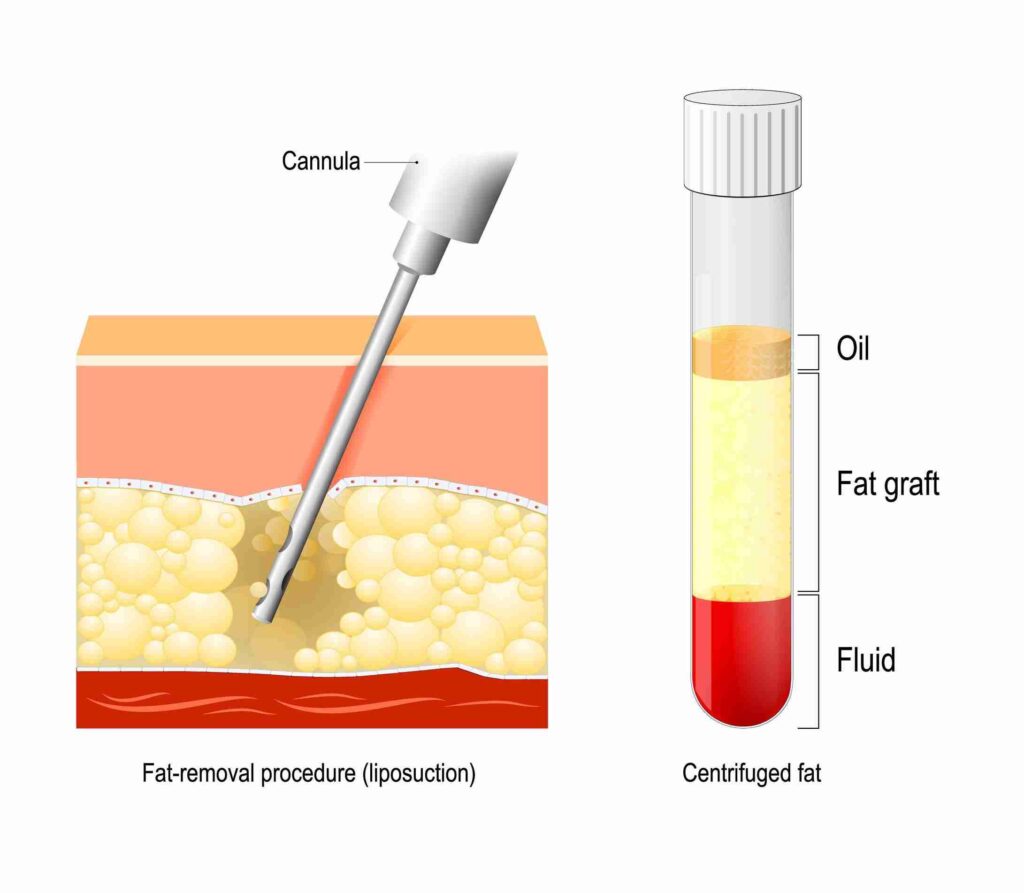
Fat grafting for breast augmentation is a two-step procedure that first extracts fat from one part of the body and transplants it into the breast to increase volume, shape, or lift. This part divides the procedure into harvesting, processing, injection, and volume planning. It details why technique and surgeon experience are crucial for predictable results.
Harvesting
Determine donor sites like abdomen, flanks, or inner/outer thighs or upper arms. These areas usually provide fat with good survival. Employ low-pressure liposuction with small cannulas to harvest fat with minimal trauma and maximal cell integrity.
Light manual aspiration or power-assisted devices on a low setting decrease bruising and tenderness by reducing trauma. Reduce trauma by minimizing high suction and mechanical force. This reduces inflammation and enhances viability.
Take standardized pre- and post-harvest photos for your records and to monitor volume extracted and donor site alteration.
Processing
Purify harvested fat with centrifugation or low-pressure filtration to eliminate blood, oil, and tumescent fluid. Centrifugation at modest speeds separates layers so the clean adipose cells can be isolated.
Filtration systems can accomplish similar purification without high g-forces. Eliminate destroyed fat and any fluid contaminants in order to maximize the viable cell fraction for grafting.
Some teams add gentle washing steps or cell-enrichment techniques, but the core goal remains the same: a clean, concentrated fat graft that will integrate predictably. Prime your final graft in tiny syringes for accurate, silky injection.
Injection
Deposit processed fat on multiple levels — subcutaneous, intraparenchymal, over the chest wall fascia — to mimic natural breast contour and avoid one large deposit. Use tiny blunt cannulas and lots of passes injecting small aliquots on withdrawal.
This results in numerous small graft parcels with a high surface area to volume ratio, facilitating revascularization and limiting fat necrosis or oil cysts. Shape the breast mound stepwise, comparing sides for symmetry.
Watch for acute complications like bleeding, keep in mind the infrequent fat embolism risk, and employ methods that prevent deep intravascular injection.
Volume planning
Determine the graft volume according to the patient’s goals, tissue capacity, and donor availability, usually targeting a half-cup to full-cup increase per session. Factor in anticipated resorption, typically 30 to 50 percent, and schedule transfers staged a few months apart if additional volume is needed.
Don’t overstuff in one session because of tissue pressure issues or an unnatural appearance. Modify your plan intraoperatively as necessary, keeping shape and survival in the long term foremost, rather than a one-session size increase.
Benefits and limitations
Fat transfer replacement post-implant removal combines benefits and compromises. It provides a more natural appearance and texture and confines the size expansion and at times necessitates working in phases. Here are targeted reviews to assist educated choices about what fat grafting can and cannot provide compared to time-proven implant alternatives.
Natural feel
Fat-grafted breasts are supple and move more like native tissue. Utilizing the patient’s own fat precludes incidences of immune rejection and foreign-body reaction that can arise with implants. For patients seeking subtle contour change and a natural slope instead of a very full upper pole, fat transfer can often meet aesthetic goals.
A patient seeking only a single-cup increase may prefer fat for touch and motion, while someone wanting dramatic enhancement typically still chooses implants. Fat grafting sidesteps implant related issues like capsular contracture, but it doesn’t negate the need for meticulous surgical planning and a dose of realism.
Donor-site tradeoffs
Fat has to come from another place, typically the abdomen, flanks or thighs, which can be a plus since liposuction sculpts those areas. Donor sites frequently exhibit minor bruising, swelling, numbness and occasionally small contour irregularities that tend to get better over weeks to months.
Patients must consider the double advantage of breast enhancement and body contouring versus potential harvest site scarring and temporary soreness. Postoperative management consists of compression, activity restriction and follow-up to monitor graft take and donor site healing in the interest of minimizing complications and optimizing aesthetic outcomes.
Volume ceiling
Fat transfer has a practical limit of about 200 ccs increase per breast that is commonly achievable in one session. That ceiling forces fat grafting to inherently fall short of large implant quantities. For a patient desiring multiple cup sizes of gain, implants are still the more reliable path.
If more volume is desired, staged injections spanning two or more sessions can add volume safely, but increase cost and recovery time. Pre-operative planning should honor what the recipient native breast tissue and skin envelope can tolerate. Over-inflation invites fat necrosis and failing grafts.
Symmetry challenges
It is harder to get perfect symmetry with fat grafting because graft take is different in different areas and tissue quality. If you have pre-existing asymmetry or deformities like tuberous breasts, I develop a specific plan for you.
Sometimes that’s a combination of a small implant and fat grafting to achieve the best possible balance. Slight variations are usual and typically fine. However, touch-ups or further sessions may be required to sculpt shape. Long-term volume stability varies.
Some grafted fat may resorb over months, while implants usually maintain size for many years but often need replacement around 15 to 20 years.
Risks and management
Breast implant removal and replacement with autologous fat grafting have separate and shared risks. Being aware of these risks, how to minimize them, and what monitoring is necessary post-surgery enables both patients and clinicians to make informed decisions and respond quickly should issues develop.
Implant-explant risks
Bleeding, infection, and wound-healing problems represent the principal immediate risks during implant removal. Major complication rates are low, with hematoma around 0.5% and infection around 0.6% according to published rates, but they still need a rapid response as they can threaten reconstruction plans.
Surgeons must prepare for meticulous hemostasis and aseptic technique. Capsular contracture, retained scar tissue or rupture of older implants may be encountered at surgery. With ruptured silicone implants, silicone gel can leak into the pocket and surgeons should be prepared to excise the capsule and contaminated tissue.
Surprises such as implant leaks or silent rupture alter the operative course and can even make the surgery longer. Removal could expose or change the chest wall and pectoral muscle. Some patients require muscle repair or contour work to regain symmetry.
Referral for imaging post-explantation rules out concerning changes in approximately 16.4 percent, with biopsy needed in 3.2 percent.
Fat transfer risks
Fat grafting risks are fat necrosis, fat reabsorption, and oil cysts. Radiologic changes post-fat grafting reveal oil cysts at 6.5 percent, calcifications at 4.5 percent, and fat necrosis at 1.2 percent. Palpable cysts are the predominant minor issue, approximately 2.0 percent, and two-thirds of those are treated by aspiration.
Rare but serious issues consist of infection and fat embolism. Because one hundred percent fat take is rare, patchy retention results in contour irregularity and may require touch-up procedures. Patients should anticipate the potential for revision and prepare for it.
Combined-procedure risks
When you combine explantation with fat transfer, you add complexity and increase operative time, thereby increasing risks including more swelling, bruising, and delayed healing. There can be dual-site complications, such as hematoma or infection, at both breasts and donor sites, leading to the risk of compounded morbidity.
Extended anesthesia and multiple surgical sites require more aggressive perioperative management. Patients should abstain from heavy-duty exercise for at least two months to reduce stress on repairing tissues. It is recommended to be nicotine-free for eight weeks prior to surgery to reduce wound healing and graft survival complications.
Monitoring and interventions
Regular follow-up visits allow teams to evaluate wound healing and fat graft survival. Arrange visits early and at fixed intervals. Monitor with ultrasound or MRI for early detection of fat necrosis, seroma, oil cysts, or suspicious calcifications.
Calcifications and oil cysts are frequently benign findings mammographically. Intervene early with drainage, antibiotics, or revision surgery as appropriate. Maintain postoperative photos and records.
Recovery and outcomes
Recovery after implant removal with fat transfer combines healing from two procedures: explant and liposuction with grafting. Recovery and outcomes vary depending on the surgical technique, patient age, and general health. The majority observe maximal swelling and bruising by day three, and a gradual decrease thereafter.
Light daily tasks are usually doable by day four or five, but fatigue and a degree of brain fog are still typical. This keeps elimination of anesthesia abundant and could aid in skin elasticity while recovering.
Timeline
Standard milestones begin with that crucial first week, when swelling and bruising are at their peak and rest is paramount. By days four to five, patients are typically back to light household activity. Energy tends to be better, but rest is still crucial.
We’re talking weeks two to four, when the gains in mobility and comfort become clear. Joint and muscle aches start to subside as inflammation decreases.
Month one continues to see swelling go down with increased energy and mental sharpness for most patients, though numbness can still persist. Between months three and six, the breasts settle into their new shape as any residual swelling subsides and fat grafts become stabilized.
This is when final results are generally seen. Return to work varies: desk jobs often at one to two weeks, physically demanding work at four to six weeks depending on surgeon guidance and individual recovery.
Week-by-week: week 1 — rest, wound care, limited walking. Week 2 — light activity up, follow-up visit. Week 3 — easy exercise as tolerated. Week 4 to 6 — progressive strength work, still some soreness. Month 3 to 6 — final contour emerges.
Expected aesthetics
Fat transfer strives for a softer, more natural contour than implants. Early volume can appear more plump post grafting but some fat reabsorption is to be expected. The actual contour will become evident at three to six months.
The scars are minimal at the sites where the implants were removed and where the fat was extracted. Small asymmetries or irregularities can present as grafted fat settles. These tend to be subtle but should be addressed in preoperative conversations.
Recovery/outcomes – before/after images are good to get realistic goals. For instance, a quiet volume gain enthusiast may experience consistent outcomes after a single pass, whereas those desiring more substantial gains could require staged grafting.
Photos should be reviewed with the surgeon under similar lighting and positions.
Touch-up needs
Certain patients require additional fat grafting if there is significant reabsorption or for shape touch-ups. Surgeons often schedule follow-ups at one, three, and six months to evaluate volume retention.
Pre-booking the possibility of a second session helps moderate expectations and the budget. Factor this into your cost planning. If contour irregularities or scar problems develop, small revisions can be done under local or general anesthesia, depending on the case.
Functional effects
Changes in firmness, softness, and mobility are common and tend to get better over time.
- Breasts can feel softer post explant with fat grafting.
- Mobility could improve now that implants and capsular stiffness are behind you.
- Some firmness can persist where scar tissue remains.
- Temporary numbness or altered nipple sensation could persist but typically improves over months.
Predictability and longevity
Fat transfer results post-explant are patient-dependent, technique-driven, and follow-up dependent. Expectability comes from several measurable points: typical survival rates, the window for stabilization, and known influences on graft take. Most patients keep around 50 to 70 percent of transplanted fat, the remainder being absorbed over the initial months.
Final volume tends to level off between 3 and 6 months. Implants, by contrast, have an unclear expiration. Some claim a 10-year limit, but evidence is mixed. Most implants, especially the newer cohesive gel silicone variety, have lasted 30 to 40 years or longer in certain patients. Regular follow-up with the surgeon counts for both approaches.
Fat resorption control
Employ careful harvest and grafting techniques to enhance fat take. Easy liposuction, low shear, immediately processed, and tiny aliquots into well-vascularized pockets all assist. Filling a breast pocket is tempting but can cause unevenness or increased resorption.
Smaller, layered deposits stimulate improved blood in-growth. Smoking, poor nutrition, radiation history, or thin recipient tissue reduce survival. Identify and address these issues prior to surgery. With big volume goals, staged procedures allow time for the graft to take and new tissue to embrace additional transfers.
A patient with a 200 mL target per breast may receive two sessions of 120 mL and then 80 mL, letting the first graft integrate before adding more.
Imaging and surveillance
Ultrasound is a convenient first line to follow up graft take and to detect fat necrosis or fluid collections. MRI provides greater soft-tissue detail and can help differentiate fat necrosis from concerning masses when clinically indicated.
Baseline imaging after surgery, then every three or six months and then annually gives a record of change. Keep scan copies to compare over years; this is useful if implants persist elsewhere in the breast or if new symptoms arise. Imaging makes clear if a palpable lump is benign fat necrosis or needs further workup.
Long-term maintenance
That’s because stable body weight maintains transplanted fat volume. Fat cells shrink when you lose weight and expand when you gain, so drastic ups and downs in weight alter breast size. Recommend balanced nutrition, smoking cessation, and modest exercise to maintain the health of the graft.
Schedule regular aesthetic check-ups, typically at six months, a year, and then annually, to determine if touch-ups are necessary. Aging, hormones, and pregnancy all can reshape breasts and change graft volume over time. Talk through what to realistically expect in the future.
For implants, regular clinical reviews and imaging as indicated catch problems early. Replacement is not based on age alone.
Advances and techniques
Recent advances in explantation and fat transfer have rendered replacement with autologous tissue, in many cases, a desirable option for patients. Fat transfer is a natural alternative to implants with a more lifelike appearance and tactile quality and can be paired with perforator flaps like the DIEP for muscle-sparing, permanent volume reconstruction. These advances aim to improve graft survival, minimize risk, and make outcomes more predictable.
Enhanced processing
Current purifying methods utilize low pressure centrifugation, filtration or washing systems to remove oil, blood and debris from the harvested fat. These increase fat quality and the percentage of living adipocytes and stromal cells that remain post-transfer. Shorter, closed-system processing limits both time and air exposure outside the body, maintaining cell viability.
A sub-15 minute turnaround is now standard for many systems. Incorporating these protocols into routine surgery minimizes case-to-case variability and turns stepwise quality checks into workflow. Advanced processing reduces bio-burden which can incite inflammation or inhibit graft take.
Clinics that use such standardized kits and protocols claim more consistent retention rates between patients. Practical example: a clinic might combine gentle centrifugation with saline washing and mesh filtration to balance speed, sterility, and cell yield.
Cell-enrichment concepts
By introducing regenerative elements to grafts, the goal is to enhance their survival. Enrichment strategies consist of concentration of adipose-derived stem cells and platelet-rich plasma (PRP) or growth factor blends. Preliminary animal studies and clinical reports demonstrate greater short-term volume retention when grafts are cell-enriched, but long-term data continues to be investigated.
Surgeons tend to save cell-enriched grafts for difficult reconstructions, scarred beds, or revision cases where baseline vascularity is low. Studies are still ongoing in randomized controlled trials, and readers can keep track through plastics journals of emerging evidence on dose and preparation and safety.
Cell-enriched fat is great for reconstructive work after mastectomy and is a nice complement to flap work when subtle contour or volume adjustments are needed.
Imaging-guided grafting
Real-time imaging like ultrasound guidance assists in positioning fat accurately within the breast mound and avoids deeper planes where the risk of fat embolism increases. Imaging demonstrates needle position and local tissue reaction, enabling focused injections to enhance contour and symmetry.
Intraoperative feedback causes surgeons to modify angle, volume per pass, and layering strategy in real time. For traumatic or revision cases where scars or previous implants have distorted anatomy, image-guided approaches enhance the safety and predictability of the procedure.
When paired with staged fat grafting, typically two to three sessions, imaging guidance facilitates blueprints to achieve the preferred half to full cup augmentation while prioritizing patient safety.
Patient planning
Some serious preoperative planning is required if you want to get consistent, long-lasting results when removing breast implants and replacing volume with your own fat. Planning connects patient goals to anatomy, characterizes surgical steps and determines timelines. It further predicts staged treatments, resource estimates and frames the informed-consent conversation.
Goal alignment
Define key drivers and aesthetic goals. Inquire what the priority is, size, shape, cleavage, or natural feel, and mention if their lifestyle has changed since the implants were placed that might change preferences.
Then match options, such as simple explant, explant with mastopexy (lift), immediate fat grafting, or staged fat transfers, to expectations and day-to-day activities. For example, a patient who wants to minimize downtime may be amenable to smaller, staged fat grafts instead of a single large-volume transfer.
Adjust the plan for tissue quality: skin elasticity, degree of sagging, and scar patterns determine whether a lift is needed alongside fat grafting. Write down these mutually agreed-upon goals in the preoperative record, including before and after photos, measurable goals like cup change or areas of contour that you would like to augment, to prevent any confusion down the road.
Donor-site assessment
Evaluate candidate donor areas—abdomen, flanks, thighs, and medial knees—for fat volume and quality. Palpate and mark sites with the patient upright to appreciate contours. Note prior surgeries, scars, or contour deformities that may limit harvest or require modified technique.
| Donor area | Pros | Cons |
|---|---|---|
| Abdomen | Often abundant fat; easy access | Prior scars may limit harvest |
| Flanks | Smooth contour; good graft quality | May be limited in very lean patients |
| Thighs (inner) | Useful for finer grafts; hides scars | Higher risk of irregularity and swelling |
| Medial knee | Good for small touch-ups | Small volume; potential discomfort |
Select locations that optimize ease of harvest and minimize donor-site morbidity. Anticipate liposuction methods that maintain graft viability.
Informed consent
Discuss risks, benefits and alternatives. Cover general surgical risks and outcomes specific to explant and fat transfer: contour irregularity, fat resorption requiring repeat sessions, infection, and need for additional lifts.
Emphasize fat grafting might involve several procedures months apart to achieve desired volume, usually 3 to 6 months. Review postoperative care, expected recovery—procedures often last 1 to 2 hours but can be longer—and return-to-work timelines: many resume light activity within 1 to 2 weeks and avoid heavy lifting for 4 to 6 weeks.
After answering questions, make sure you understand and get their signature.
Cost and logistics
Provide an itemized cost estimate: surgeon fees, facility, anesthesia, and separate charges for staged touch-ups. The typical total ranges from 3,000 to 10,000 USD depending on complexity.
Talk about insurance options when reconstruction is medically necessary. Step back and plan in scheduling, pre-op clearance, postoperative help, and timelines for staged transfers and lifts.
Make the patient part of the cost and planning decisions so that you are on the same page in terms of expectations and logistics.
Perioperative care
Perioperative care seeks to minimize risk, promote recovery, and establish expectations preoperatively, intraoperatively, and postoperatively following implant removal with fat transfer. Get medical status optimized, take evidence-based intraoperative steps, provide clear postop instructions, and rehab planning so patients recover comfort and function.
Preoperative optimization
Discuss smoking, alcohol consumption, and weight. Smoking cessation for a minimum of 4 weeks reduces the risk of wound and fat-graft loss. Provide nicotine replacement or referral. If BMI is high, talk about staged weight goals and how excess weight alters donor site fat quality and healing.
Order labs and clearances: basic blood count, coagulation panel, metabolic profile, and pregnancy test when relevant. Cardiac or endocrine consults if indicated by history. Review allergies and previous surgeries to map scar and flap lines.
Discuss perioperative care, fasting times, medications to stop, such as anticoagulants and some supplements, and those to continue, for example, essential cardiac medications with a sip of water. Teach about antiseptic showers, hair removal policies, and what to wear on arrival.
Document surgical and donor sites with photographs and measurements. Prep skin with chlorhexidine or povidone per protocol. Map out donor zones, including abdomen, flanks, and thighs, according to volume and scar positioning.
Intraoperative protocols
Keep strict sterile fields, single-use instruments where indicated, and antibiotic prophylaxis according to guidelines. Apply laminar flow or operating room ventilation standards when available to reduce the risk of contamination.
Harvest fat with low-pressure liposuction and atraumatic cannulas to preserve adipocytes. Process graft by centrifuge or decanting depending on surgeon preference and evidence. Deposit fat in small aliquots and multiple planes for better take and better contour.
Keep an eye on vitals and have anesthesia optimized to the patient’s health, local with sedation or general anesthesia. Perioperative care involves controlling fluids and temperature to prevent hypotension and hypothermia, which kill graft survival!
Note record volumes harvested, volume injected per breast, donor sites, operative time, and any deviations. These notes direct postoperative care and subsequent revisions.
Postoperative instructions
Give clear steps: how to care for incisions, when to change dressings, and when to wear a supportive, non-compressive bra. Sutures out by plan and dry donor sites for the first period of time.
Limit lifting and exercise for 4 to 6 weeks, with early ambulation. Recommend sleeping slightly elevated and on the back to minimize swelling and shear on grafts.
List warning signs: fever, increasing pain, redness, large fluid collections, or sudden volume loss. List emergency contact and urgent review criteria.
Establish follow-up at 48 to 72 hours, 1 week, 1 month, and 3 months, with photos and measurements to document graft retention.
Rehabilitation
Begin gentle arm and shoulder stretches early to stave off stiffness, demonstrate simple exercises and boundaries. Perioperative care. Increase activity slowly according to your comfort and wound healing. No high impact exercise until cleared.
Use scheduled analgesics, short courses of NSAIDs, and cold packs to manage swelling and pain. Consider physical therapy for persistent tightness.
Provide counseling for body-image adjustment and realistic expectations about breast shape, symmetry, and potential for revision.
Unique point of view
Breast implant removal with autologous fat transfer is more than simply a trade-off of substances. It is a transition in objectives. This strategy compels surgeons and patients to consider long-term tissue health, achievable volume targets, and the confines of fat grafting.
The next sections dissect when smaller, tissue-sparing decisions work best, how to save the breast’s blood supply and skin, and how to strategize for long-lasting beauty.
When less is more
Small differences frequently generate greater pleasure. Small to moderate volume goals keep the amount of fat injected within safe limits and reduce the risk of irregular resorption. For instance, a patient desiring a slight lift and soft fullness might require only 100 to 250 milliliters per breast across one or two sessions, as opposed to a heavy-handed, single-stage graft.
Not overcorrecting counts. Too much grafting adds pressure in recipient pockets, increases the risk of fat necrosis, and develops lumps or calcifications that make imaging more difficult. Surgeons advise staging procedures: place a conservative amount of fat, let it settle and vascularize, then add more if needed.
Rate proportional results look natural. By matching breast changes to an individual’s torso width, chest wall shape, and shoulder line, balance is created. Most patients opt for a natural slope and soft contour versus a size jump.
Patient surveys demonstrate greater satisfaction when results align with overall body shape as opposed to hitting a numeric cup-size goal.
Prioritizing tissue health
Protecting blood flow is key. Gentle skin flaps and careful dissection during explant preserve microvasculature, which supports graft take. Surgeons utilize small cannulas, low-pressure liposuction, and layered, microdroplet fat placement to minimize trauma.
Select methods that minimize fat necrosis and scarring. Filtering and washing harvested fat and layering it in multiple planes reduce clumping and central necrosis. Incisions within natural creases and fat delivery via tunnels minimize scars and keep skin supple.
Keeping skin tight is crucial once the implants are out. Skin stretched by implants can take time to retract or require adjunctive procedures such as a limited lift. Preoperative counseling on realistic tissue behavior helps set patient expectations and decreases revision rates.
Combining aesthetics with longevity
Think long term. Conservative graft volumes, preservation of skin and muscle, and lanky contours that age well are essential. Methods that honor tissue biology reduce the risk of subsequent revision surgery.
Reduce reoperations by aligning objectives to approach. If substantial lift or volume is required, pair fat grafting with focused skin tightening instead of aggressive repeated grafting.
Discuss the lifestyle changes, such as weight loss and pregnancy, that influence results. Aim for results that float softly with the years. Natural-feeling pliability, firm form, and low-maintenance scarring all lend themselves to long-term happiness.
Conclusion
Breast implant removal with fat transfer provides a definitive alternative for individuals seeking a natural aesthetic. Fat grafting can fill volume, soften contours and skirt new implants. Surgeons select technique based on tissue quality, implant history, and desired outcomes. Anticipate weeks of recovery, gradual transformations over months and years of stable results with healthy weight and maintenance. There are risks, but most things get fixed with just a few simple steps and follow-up. Real-life cases demonstrate a smoother shape and a calmer chest feel post surgery and grafting. For a personalized plan, consult a board-certified plastic surgeon experienced in fat grafting who will show you before-and-afters from similar patients. Book a consult to discuss options and next steps.
Frequently Asked Questions
What is breast implant removal with fat transfer replacement?
It’s a two step process. First, they take out the implant. Then the surgeon takes your own fat, harvests it, and grafts it back to the breasts to replace the lost volume and shape without any new implants.
Who is a good candidate for this procedure?
Ideal candidates desire smaller, natural appearing breasts. They require sufficient donor fat, good overall health, and realistic expectations of volume and shape alterations.
How much breast volume can fat grafting replace after implant removal?
Fat grafting typically substitutes a moderate volume, often one to two cup sizes. Full implant-sized volume typically necessitates staged sessions and donor fat and tissue support.
What are the main risks and complications?
Things that can go wrong include fat necrosis, infection, asymmetry, and partial fat resorption. Implant capsule caps or new chest wall changes can impact outcomes. All risks are controllable with appropriate management.
How long is recovery and when will I see final results?
Anticipate 1 to 2 weeks of downtime or light activity. Breast shape emerges in weeks, but the final result is after 3 to 6 months once grafted fat settles and scars mature.
Are results predictable and long-lasting?
Results are usually long-lasting if weight is stable. Approximately 60 to 80 percent of grafted fat survives long-term. There will be some volume loss and further sessions may be required for best outcomes.
Can fat grafting address breast shape and sagging after implant removal?
Fat enhances shape and fullness and has minimal lift. Severe sagging typically necessitates a breast lift (mastopexy) in conjunction with fat grafting for good shape and position.