Key Takeaways
- Fat transfer is about tissue health, not just volume support. It provides viable adipocytes and adipose-derived stem cells to stimulate angiogenesis, extracellular matrix remodeling, and local tissue healing. Anticipate enhanced vascularity and tissue quality in the long run.
- We know graft survival requires revascularization and meticulous technique. Seek experienced surgeons, gentle harvest, small grafts, and microdroplet placement to minimize necrosis and maximize longevity.
- Fat can be transferred for tissue health, not just volume. Fat grafting can soften and remodel scarred tissue, improve skin elasticity, hydration, and thickness, and reduce chronic inflammation, making it an option for scar treatment, facial rejuvenation, and reconstructive needs.
- Patient selection and preparation are important for durable results. Ensure adequate donor fat, stable weight, good general health, and no smoking or untreated systemic conditions that compromise vascularity.
- Postoperative care and long-term habits impact outcomes, so adhere to early protection and surveillance guidelines, maintain a stable weight and healthy lifestyle, and schedule follow-up to address resorption or touch-ups as necessary.
- Emerging enhancements in processing, stem cell enrichment, and precision injection techniques hold the promise of improved graft retention and expanded regenerative applications. Talk about future possibilities and centers of excellence when considering treatment.
Fat transfer for tissue health not just volume uses your own fat to boost skin quality and enhance healing. It delivers nourishing cells and growth factors to thin or scarred areas that can enhance blood circulation and the elasticity of soft tissues.
Clinicians utilize it in tandem with scar repair, breast reconstruction, and even joint care to reduce pain and improve function. Below, they break down techniques, advantages, and recovery expectations.
Regenerative Power
Regenerative power is the term used to define the ability of specific cells, tissues, or compounds to promote repair and rejuvenation of damaged or aging tissue. Fat transfer offers more than volume restoration. It supplies living tissue, stem cells, and signaling molecules that actively change the biology of recipient sites.
1. Cellular Action
Transplanted adipocytes provide an immediate soft-tissue bulk and ADSCs operate through paracrine signals to promote repair. ADSCs release growth factors that recruit host cells, dampen inflammation and direct tissue regeneration.
Adipogenesis takes place when progenitor cells mature into fat cells and become one with the local tissue and can only be achieved if the cells survive and have support from a scaffold. Mature adipocyte survival is critical because dead fat induces resorption and fibrosis.
Studies demonstrate conventional grafting retains approximately 30 to 40 percent of cells one year post-procedure without augmentation. Mechanical disaggregation provides significantly more viable cells than enzymatic dissociation, which contributes to delivering a richer mixture of progenitors.
Nanofat procedures emulsify grafts into tiny particles that isolate stem cells and growth factors, which in turn enhance collagen synthesis and dermal repair. Additives like P188 have demonstrated promise in lab studies to enhance fat cell survival during manipulation and transfer.
2. Blood Supply
Graft revascularization is key for survival and durable outcomes. Early new blood vessel formation delivers oxygen and nutrients, restricts fat cell death and primes the environment for sustained retention.
Without timely angiogenesis, diffusion limits cause central graft death and increased resorption. Surgical technique affects vascular ingrowth: small, well-dispersed aliquots favor capillary invasion while large boluses impede it.
Recipient tissue quality counts — scarred or irradiated beds have diminished angiogenic potential and need staged or adjunctive strategies. Practical considerations are injection plane, graft parcel size and utilization of adjuncts such as platelet-rich plasma to accelerate vessel ingrowth.
3. Scar Remodeling
Fat grafting can soften fibrotic tissue and increase pliability. ADSCs and growth factors mitigate chronic inflammation and modulate fibroblast activity, stimulating extracellular matrix remodeling.
Clinical series reports benefits for atrophic scars, posttraumatic deformities and scleroderma, in improved texture and mobility. Nanofat and microfat applications tend to be more focused on dermal fibrosis and collagen reorganization.
Results include less stress, fewer anchors and improved scar pigmentation over time.
4. Skin Quality
Patients often experience enhanced skin thickness, hydration, and elasticity post-transfer. Paracrine signaling from ADSCs stimulates dermal cells and increases collagen and elastin production.
Fat grafting for facial rejuvenation improves thin soft-tissue coverage and aging skin, with reduced fine lines, improved tone, and a firmer dermis. Nanofat is most beneficial for superficial quality improvements.
5. Lasting Results
Longevity is contingent on graft survival, revascularisation and patient factors. Retention rates vary but can exceed temporary synthetic fillers for long-term tissue health.
The right harvest, mild processing, and thoughtful injection amplify lasting volume and functionality. Volume aside, the true lasting benefit is enhanced vascularity, tissue integrity, and scar remodeling.
Procedural Nuances
Fat transfer for tissue health requires a clear view of each step: assess recipient and donor areas, harvest with care, process to retain viable cells, and inject with precision. Errors at any stage from poor donor selection to rough handling during reinjection reduce adipocyte survival and limit regenerative benefit.
Fat Source
Fat is commonly harvested from the abdomen, thighs, or flanks where subcutaneous tissue is abundant. Donor site selection influences adipocyte survival. More vascular, healthy tissue provides high quality lipoaspirate and optimal graft results.
Lipoaspirate is prepared for autologous transplantation by gentle aspiration and immediate transfer to sterile containers. Fat availability and tissue makeup, the ratio of mature adipocytes, stromal vascular fraction, and connective tissue, shape the plan. Large-volume needs may require multiple donor sites, while finer facial work benefits from thin, pliable fat.
A preoperative evaluation of both donor and recipient areas helps determine an optimal match of tissue types and establish realistic expectations.
Processing Method
Postharvest processing generally involves decanting, centrifugation, and filtration to concentrate the viable elements. The aim is to strip free lipid, acellular oil, blood, and debris while maintaining cell viability. Various approaches trade off speed, yield, and cell viability.
| Method | Pros | Cons |
|---|---|---|
| Decanting | Low trauma, simple | Slower, less concentrated |
| Centrifugation | Concentrates cells, removes oil | Risk of cell damage if spun too hard |
| Filtration/Washing | Cleans debris, preserves cells | Requires equipment, can lose volume |
Take the plungers out of 1 mL syringes and fill from the open back rather than aspirating through Luer-lock. This reduces shear and protects adipocytes. Other adjuncts on the horizon are PRP or PRF mixed with graft to possibly improve survival by supplying additional growth factors.
Injection Technique
These procedural nuances, small incisions and placing tiny fat droplets in natural planes, are what matter for integration. Employ microdroplet or layered injection techniques to distribute grafts as broadly as possible and prevent clumping.
- Inject in 1 to 2 mm aliquots in a crosshatch pattern to varying depths.
- Inject fat in small threads as you pull back the cannula to encourage recipient tissue contact.
- Reverse the plane from superficial to deep depending on the facial subunit and scar or tissue quality.
- Reduce cannula length for facial work to 5 to 9 cm for better control and safety.
Cannula size and depth vary distribution and integration. Thinner cannulas facilitate fine contouring but may shear cells more if used improperly. A little bit of overcorrection, near 20%, is fine.
Many patients will resorb some of the volume and either come back or they can always top up. Integration requires something on the order of four months. Small things like asymmetry or contour irregularity happen in a significant percentage of patients, underscoring the procedural nuances and necessity for individual technique and experience.
Patient Suitability
Fat transfer is used not only to restore volume but to improve tissue health. Patient selection determines results. A surgical consultation includes a thorough review of your medical history, anatomy, goals, donor-site availability, and realistic expectations before any plan is made.
Ideal Candidates
Best candidates have sufficient donor fat, excellent health overall, and well-defined, localized tissue demands. They must be free of any uncontrolled medical conditions and have reasonable expectations regarding tissue quality and volume.
Examples include a patient with facial hollows after weight loss seeking soft-tissue padding, a woman pursuing modest, natural breast contouring after lumpectomy, and a person wanting scar softening or contour repair after trauma.
They typically are candidates for breast reconstruction, face lifts or buttock shaping. In breast work, those who desire subtle shape change instead of high-volume augmentation often do best.
On the face, we have found patients with localized volume loss—malar or perioral hollows—display consistent graft take. Tock enhancement suits those with adequate donor fat and preference for re-contouring versus a big size increase.
Stable weight is critical. They should have a stable weight curve for months pre and post surgery. Major gain or loss changes graft volume and contour. Most patients require multiple sessions for larger areas, so a staged plan is typical.
Expect changes to manifest in the 3 to 6 month range. Usually, 50 to 70 percent of transferred fat persists long term, but it varies by patient. A personal consultation is the standard initial point.
It includes objectives, prior surgeries review, and biocompatibility discussion. Utilizing the patient’s own tissue reduces rejection risk. Patients have to understand they’re actually healing in two locations – the donor and recipient and require post-care for both areas.
Smoking or nicotine use increases risk and typically needs to be stopped weeks prior to and after treatment to facilitate healing.
Limiting Factors
Inappropriate recipient bed – poor vascular supply diminishes graft survival. Thin tissues, chronic inflammation or previous radiation typically translate to lower take rates and risk for fibrosis.
Previous surgeries or large scars can reduce the amount of available healthy tissue and make positioning technically more difficult. Systemic diseases such as uncontrolled diabetes or advanced heart disease can increase the risk of complications and could be contraindicated.
Active infection or unhealthy donor sites are obvious contraindications. Smoking, metabolic disorders, or medications that impair healing restrict candidacy.
Technical limits such as limited donor fat and some anatomical sites being hard to reach or maintain grafts. If a patient experiences significant weight fluctuations following the procedure, it can change the results, causing asymmetry or loss of contour.
Complications are fairly rare. A few studies find major complication rates approaching 10.9%, so the risk has to be discussed.
The Healing Process
Fat transfer seeks to replace tissue vitality in addition to contour. Healing occurs in phases that dictate early symptoms, intermediate stability, and the long-term fate of grafted fat. Knowing about those stages helps establish reasonable expectations and directs both acute and sustained treatment.
- Acute repair: inflammation, clotting, and early graft survival.
- Revascularization: new blood vessel growth into the grafted fat.
- Tissue remodeling: integration, volume stabilization, and scar maturation.
Immediate Aftercare
Safeguard the grafted region against pressure and injury. Avoid compression garments, direct compression and activities that press the grafted tissue for a minimum of 2 to 4 weeks based on location. Rest on your back or with your head elevated to ease the pressure and control the swelling.
Apply cold packs to treated areas for the first 48 to 72 hours, sparingly, to reduce bruising. Limbs should be elevated when possible to help drain fluid and reduce swelling. Anticipate bruising and swelling at both donor and injection sites, with scabs at the small incision ports typically resolving within 5 to 7 days.
Mild to moderate pain is typical and is controlled with prescription pain medication. Watch for signs of complications. Intensifying redness, fever, increasing pain or drainage can signal infection. Solid nodules, lingering indurated nodules, or skin pigmentation can be indicative of fat necrosis.
Sudden shortness of breath, chest pain, or neurological symptoms require emergency attention for potential fat embolism. Usual activity restrictions are light walking soon to encourage circulation, no strenuous upper-body activity for 3 to 4 weeks, and return to non-strenuous work in around 10 to 14 days. Follow wound-care instructions: keep small ports clean and dry until healed, and use compression garments on donor areas as advised.
Long-Term Care
Stable weight preserves graft volume and contour. Big weight swings can cause transferred fat to shrink or swell, messing with your symmetry. Scheduled follow ups at regular intervals allow clinicians to evaluate graft integration, correct asymmetry, and schedule touch ups if necessary.
It’s about six months for injected fat cells to establish a new blood supply and for final results to emerge. Swelling can linger for 4 to 6 weeks before resolving. Promote tissue health through nutrition and hydration. Protein and micronutrients help repair.
Quitting smoking is essential because nicotine impedes revascularization and contributes to graft loss. Anticipate the majority to return to full activity by 6 to 8 weeks. Recovery is dependent on the treatment location. If substantial resorption takes place, secondary procedures can be scheduled after the six-month stability point.
Softening, decreased swelling, and gentle contour symmetry are signs of healing, whereas increasing pain, persistent nodules, or infection must be addressed promptly.
A Personal Perspective
Fat transfer is about more than just adding volume. It can alter the appearance and function of tissue. Clinicians and patients I’ve worked with often describe results that go beyond size, including improved skin tone, less scar tightness, better cushioning over bony areas, and renewed function in places affected by trauma or surgery.
Fat is removed from one area and injected into another. That easy maneuver can provide both form and fitness in a single stroke.
Real-world patient experiences
One middle-aged patient had a pitted scar on her cheek from an auto accident. One fat grafting session later, the scar has risen and the skin above is more supple. Over a period of half a year, the grafted fat developed new blood vessels and the appearance was natural.
She said she slept on the injured side pain-free for the first time in years. Another patient employed lipofilling to replenish lost lip volume following radiation. One session more gave better symmetry and increased speech confidence.
A third patient underwent breast reconstruction with small fat grafts filling contour defects. The skin improved and the implants were less palpable.
Improvements in quality of life and self-image
Patients experience obvious life transformations. Less pain in sitting, a better clothing fit, and less padding are typical. They report a confidence lift from understated, natural looking results.
For facial work, making a hollow under the eyes look less tired and more rested can impact social interactions and job impressions. These aren’t just visual tweaks; they’re functional transformations. They come from improved tissue integrity and padding, not mere thickness.
Complex reconstructive and cosmetic cases
Fat grafting treats difficult issues. It can smooth contour deformities post-liposuction, fill defects post-tumor excision, and refresh damaged scalp tissue to handle hair grafts.
For those new to the term, a Brazilian butt lift is the most popular fat transfer, employed to inject shape and curve and sculpt donor sites simultaneously. Some cases need staged grafting with small, careful injections over several sessions to maximize viability and avoid complications.
Before-and-after and expected outcomes
Standard capacity is 50 to 70 percent of displaced volume. A tiny percentage is reabsorbed and outcomes develop by around six months as new vascularity develops. Technique matters: careful harvesting, minimal handling, and precise placement help maximize fat survival.
Fat transfer gives dual benefits: it sculpts and adds volume in a single surgery. As for lips, lipofilling frequently requires just one visit to get them looking and feeling just the way you want them to.
Future Outlook
Fat transfer is shifting from a volume technique to a tissue quality and function tool. Short context: Fat carries living cells and growth factors that can change the tissue around them. This chapter examines potential technological innovations, broader clinical applications, enhancements in graft longevity and biocompatibility, and the technologies and methodologies that will define results.
Predict advancements in fat grafting techniques, such as enhanced adipose stem cell enrichment and precision grafting
Anticipate additional optimized cell enrichment techniques that increase the regenerative component of grafts. Current techniques isolate ADSCs by mechanical or enzymatic steps. Future platforms will probably mix mild processing with conventional filters to maintain cell viability.
Surgeons will employ lower-pressure harvest and smaller, layered placement to minimize trauma and enhance contact with host tissue. Precision grafting will employ microdroplet technology with precise control over droplet size and spacing to ensure each fat parcel receives rapid vascular access.
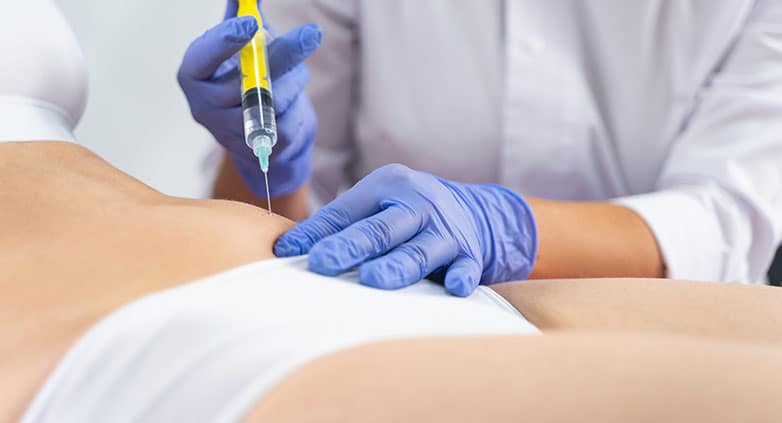
For example, placing many small droplets 1 to 2 mm apart in the dermal plane versus one large bolus in a single pocket increases survival and tissue integration.
Anticipate broader applications in regenerative medicine, wound healing, and tissue engineering
Fat grafts will extend beyond aesthetics. In chronic wounds and radiation-damaged tissue, ADSCs and secreted factors can reduce inflammation and accelerate tissue repair. Clinical trials are already trying fat for fistula repair, scar softening, and cushioning joint surfaces.
Tissue engineering will combine fat with scaffold materials to reconstruct complex soft-tissue defects. For example, combining processed fat with a biodegradable mesh can rebuild a post-trauma facial defect while restoring skin quality and sensation.
Foresee improvements in graft survival theory, biocompatibility, and long-term fat transfer results
Knowledge of graft survival will move from a primitive focus on volume retention to vascular integration and paracrine effects. Research will clarify how much volume remains versus how much the graft modifies host tissue function.
Clinically, patients can expect approximately 40% to 60% of injected fat to remain long term, with volume stabilizing near eight months and final results visible after about six months when neo-angiogenesis occurs. As surgeons point out, what is left after three to six months tends to stick around if weight remains stable.
One year is really the final outcome and five-year results hold steady. Unlike implants, which often require swap surgery at around 10 years, transferred fat requires no routine replacement.
Suggest ongoing innovation in surgical instruments, imaging, and postharvest fat processing for better outcomes
Think improved cannulas, low-trauma harvest devices, and portable processing units that execute standardized cycles to reduce variability. Imaging innovations, such as high-resolution ultrasound and portable MRI, will allow physicians to chart recipient bed perfusion and direct accurate placement.
Postharvest processes will trend to closed, aseptic systems that wash, grade, and fortify fat within minutes at the point of care, minimizing contamination risk and enhancing cell survival.
Conclusion
Fat transfer does more than give you shape. It brings living cells and growth factors that help tissue heal and feel better. Research indicates improvements in skin texture, circulation, and scar softening. If you have thin tissue, prior surgery, or slow healing, fat transfer for tissue health, not just volume, delivers transparent, quantified advantages. Surgeons’ meticulous harvest and delicate grafting preserve cells and reduce risk. Recovery follows a steady path: swelling drops, function returns, and quality of tissue improves over months. Case notes and patient stories describe consistent, persistent change, not magic bullets. To anyone considering the options, weigh long-term tissue health against volume needs. Discover the possibilities, inquire about survival rates, and schedule a consultation with a board-certified practitioner to develop a plan tailored to your objectives.
Frequently Asked Questions
What is fat transfer for tissue health and how does it differ from traditional fat grafting?
Fat transfer for tissue health, not just volume. It highlights regenerative cells and careful handling to promote repair, not just volume replacement.
Who is a good candidate for regenerative fat transfer?
Good candidates are reasonably healthy adults with reasonable expectations. Candidates can have scarred, thin, or irradiated tissue that requires better quality, not just volume.
What regenerative benefits can patients expect after the procedure?
Patients can experience improved skin quality, thicker tissue, reduced scarring, and increased vascularity. Individual results may vary.
How long does it take to see tissue improvement after fat transfer?
Early healing is observed in weeks. This is why meaningful regenerative changes typically manifest across three to six months, as transferred cells integrate into and remodel native tissues.
What are the main risks and how can they be minimized?
Risks are infection, irregularities, and partial fat loss. Selecting an expert surgeon, using sterile techniques, and providing proper aftercare reduces complications.
How does the procedure differ technically from standard cosmetic fat grafting?
Surgeons like Dr. Kantor employ gentler harvesting and careful processing to preserve regenerative cells. They use precise injection techniques that deposit small amounts into targeted layers of tissue for healing.
Will transferred fat last and will I need repeat treatments?
A bit of fat stays, a bit disappears. Most patients require multiple sessions for ideal regenerative impact. Maintenance varies by patient healing and goals.