Key Takeaways
- Pack a clearly organized bag with ID, insurance papers, and copies to quicken check-in and avoid holdups at the clinic. Double-check this the night before surgery.
- Loose, front-opening clothing, slip-on shoes, and dark towels should be your packing priorities to maximize comfort, minimize dressing strain, and guard seats from drainage.
- Pack prescriptions in original containers, a spill-proof tumbler, chapstick, and alcohol-free wipes to assist with pain management, hydration, and hygiene post discharge.
- Line up waterproof seat covers and a travel pillow for your ride home in your own car with a sober driver.
- Don’t bring tight clothes, scented lotions, or extra phone chargers to avoid irritation, prevent infection, and keep you focused on healing.
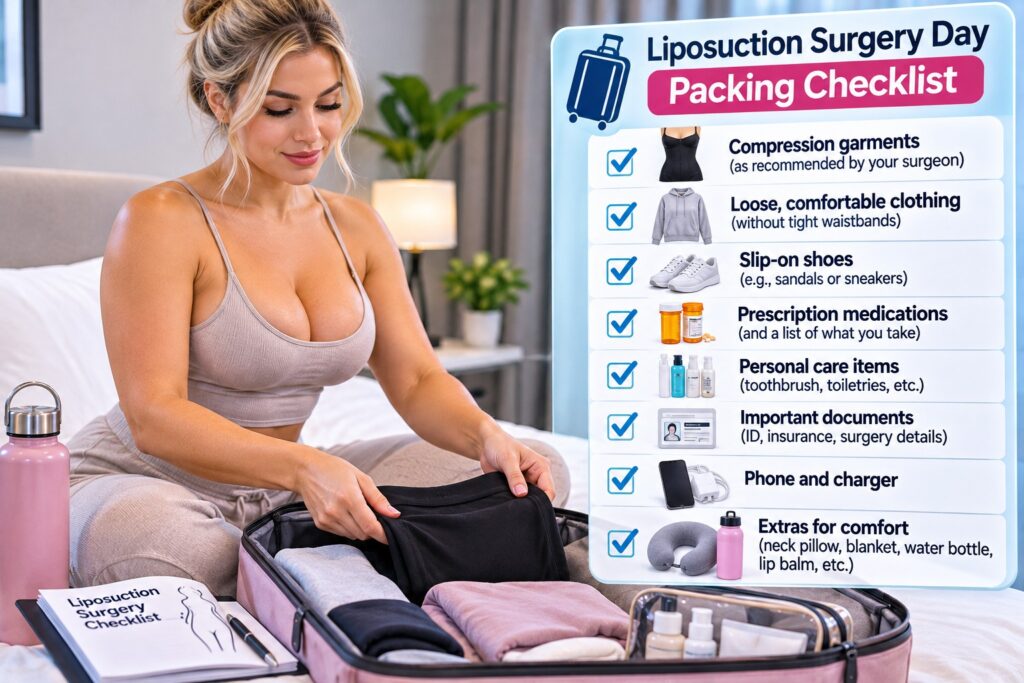
- Cross-check the liposuction packing list below to make sure you’ve packed everything. Keep staples handy and adapt this list to your procedure based on your surgeon’s instructions.
A liposuction packing list for surgery day is a short list of things to take with you to the clinic and recovery area. It includes necessities like loose clothing, compression garments, ID and insurance cards, medications, wound care supplies and a charged phone. The list mentions snacks, a water bottle and comfort items such as pillows. The guide keeps patients organized and focused on recovery postprocedure.
Primary Essentials
One neat bag packed with priority items for comfort, safety, and clinic compliance. Double-check the list the night before, finalize your surgery date, arrival time and location, and secure a driver and head checker for your first few days. Store in an easy to access labeled pouch or folder and make a checklist as you pack.
1. Identification Documents
- Valid photo ID for hospital or clinic check-in.
- Insurance cards and any pre-op authorization forms the clinic needs.
- All consent forms or clinic paperwork must be signed and filed in a secure folder.
- Photocopies or digital scans stored on your phone and a printed set in the event that originals get lost.
Slip your docs into an accessible sleeve inside your bag. Clinic staff will ask for these right away when you arrive, so have them on top to avoid fumbling when you’re tired or stressed.
2. Loose Clothing
- Oversized shirts and pants for easy dressing after surgery.
- Front-button or zippered tops to avoid lifting arms.
- Breathable, soft fabrics like cotton or modal minimize irritation.
- One additional set in the unfortunate event of leakage, spills, or sweat.
Bring a post-surgical pillow to prop you slightly up if told to sleep on your back, along with a soft blanket or lightweight throw for warmth. Focus on clothes that allow you to easily wear compression garments.
3. Slip Shoes
- Slip-ons so you don’t have to bend or strain after surgery.
- Non-slip soles for safe walking on smooth surfaces.
- Roomy fit to allow for swelling.
- Avoid laces or buckles for quick removal.
Take the shoes to the clinic if you can. Pack a spare in case you swell or get wet. Shoes safeguard feet on the mini-strolls staff suggests to prevent clots.
4. Dark Towels
- Dark-colored towels to conceal stains from drainage.
- Protect the car seat and bedding on the ride home with towels!
- Pack multiple towels for backups during transit.
- Choose thick, absorbent materials for better protection.
Primary Essentials Fragrance-free soap and moisturizer are key for skin care during recovery. A handheld shower head or shower chair can be a lifesaver if standing becomes challenging. Arrange for help with showers and dressing for the first few days.
5. Prescribed Medications
- All prescribed meds in original containers.
- Include pain relievers, antibiotics, and routine medications.
- Set alarms or reminders for on-time dosing.
- Keep meds in a labeled, easy-access pouch.
Verify any clinic-based limitations on bringing in medications and provide the list to your support person for backup dosing instructions.
Discharge Comfort
Discharge comfort molds the beginning of recovery and influences pain, wound care, mobility, and emotional comfort. Pack a ‘discharge comfort’ bag with some essentials that embrace hydration, skin care, and cleanliness to ensure those first hours home are less stressful. Put together the bag and keep it handy in the car. Inform a caregiver about where the bag is.
Water Tumbler
Bring a spill-proof water tumbler with a capacity of at least 500 to 750 ml to keep hydrated post-anesthesia. Fill it prior to leaving the clinic so that plain water is waiting the moment you’re in the car seat. Swallowing can be sluggish during the initial days, and small, consistent sips help keep nausea and cotton mouth at bay. A straw lid or flip-top spout reduces the need to lift the head or tilt the body, which comes in handy if you’re encumbered by compression garments or drains. You can ease your mind by cleaning and packing the tumbler the night before surgery to avoid last-minute stress and to make sure there are no residual tastes or contaminants. Think of one with measurement marks so a caregiver can monitor intake over the two hours post-discharge.
Lip Balm
Put on some fragrance-free lip balm before leaving the facility. No one likes dry, cracked lips that tend to result from anesthesia and mouth breathing. Opt for a mild formulation with minimal ingredients such as petrolatum or shea butter to lower the risk of causing irritation for sensitive skin. We keep one tube within arm’s reach in your discharge bag and another tucked into a separate pocket or Mom’s bag as a safety measure. Lip balm is a little thing that makes a big difference in comfort. Just reapply as necessary, particularly if medications or oxygen have dried out the lips.
Wet Wipes
- Benefits: Clean skin quickly after the clinic, remove sweat or ointment, freshen hands, and support perineal or incision-area wiping when showering is delayed.
- Types to consider: alcohol-free, fragrance-free, hypoallergenic baby wipes, antiseptic surgical wipes for clinician-preferred cleansing, Discharge Comfort – aloe moisturizing wipes.
- Pack wipes in a ziplock bag to keep them damp and convenient. Bring at least one full travel-size pack for the clinic and a second pack for the trip home.
- Wipes clean the hands before touching dressings, freshen the face, and reduce irritation from sweat under compression garments.
| Item | Why it matters | Pack size |
|---|---|---|
| Water tumbler (straw lid) | Hydration, less movement | 500–750 ml |
| Lip balm (fragrance-free) | Prevents dry, cracked lips | 2 tubes |
| Wet wipes (alcohol-free) | Cleanliness, gentle cleansing | 2 resealable packs |
Opt for loose, easy clothing and a supportive recovery bra if advised. Verify pain control and wound care instructions with the care team at discharge.
Vehicle Preparation
Get the car ready, so the ride home is clean, safe, and comfortable. Think about seating, support, and within arm’s reach necessities. Set up a driver for surgery day and a support person for those first few days at home. This is your most important logistics step, not some complicated vehicle modifications. Create a quick list and fill it with clothing that’s easy to slip on and wear over dressings.
Seat Covers
Lay down waterproof seat covers to shield upholstery from excreted fluids and bloody dressings, either disposable polyethylene or heavy-duty washable covers designed for pets and kids. Fasten covers firmly in place with straps, clips or non-slip pads so they don’t slide when you enter or exit. Unfastened covers can bunch under you and either hurt or disturb healing. For blood-tinged drainage or when immediate washing is not possible, disposable covers should be used, though washable covers are great if you can wash the same day. Peel covers immediately after use to avoid staining the cover or seat beneath it. Damp fabric left on can cause discoloration and odors.
Put a small towel under the cover where drains or incision sites will come in contact with the seat for additional absorbency. Consider a seat belt pillow nestled between your chest and the belt if your care team gives you the green light. It lessens pressure and fends off chafing of incisions. Make sure covers don’t obstruct airbags or seat belts before driving off.
Travel Pillow
Bring along a good travel pillow for neck and upper back support. Whether a U-shaped memory foam pillow or rectangular lumbar cushion, it can decrease tension during quick jaunts. Opt for a pillow that has a washable cover and breathable material to move moisture away from your skin and help keep you dry during extended periods of wear. Place the pillow in your car prior to getting in so it’s in ‘just the right spot’ and doesn’t press against sensitive treated areas. Getting in and out of bed post-surgery sucks.
Pre-store this pillow in the car so it’s not forgotten, either where the patient will sit or in the passenger footwell for quick transfer. For seat belt comfort, a little pad that wraps around the belt comes in handy when given the OK by the clinical team. Add a front-opening top in one size bigger than usual to the pillow to skirt lifts over the head that can stress wounds and bandages.
Items To Avoid
Make surgery day safe and comfortable by leaving these items and activities off your packing list and schedule. The following lists what to avoid, why it is important, and how to deal with each.
- Foods and drinks after midnight: no solid food, no water, unless your surgical team gives different instructions. Fasting reduces the danger of aspiration under anesthesia.
- Certain prescription medications include stopping diuretics, diabetes medications, and anticoagulants such as aspirin, warfarin, and Coumadin per surgeon guidance to reduce bleeding risk.
- Herbal supplements and specific OTCs: avoid vitamin E, fish oil, herbal medicines, diet pills, multivitamins, aspirin, and NSAIDs (ibuprofen, Advil) for the period your provider recommends, often 7 to 10 days before surgery.
- Nicotine products: No smoking or vaping for six to eight weeks before and after elective procedures to cut infection and healing complications.
- Scented products: no perfumes, scented lotions, or fragranced deodorants. Scents can irritate wounds and interfere with staff who have sensitivities.
- Tight clothing and restrictive accessories: skip tight shirts, skinny jeans, belts, tight jewelry, or anything that will rub or compress treated areas or complicate dressing changes.
- Makeup and nail polish: do not wear makeup or nail polish on surgery day. Transparent nails assist nurses in tracking oxygen saturation and complexion.
- Unnecessary electronics: avoid bringing tablets, gaming consoles, or extra chargers. Limit devices to a phone and charger to reduce distraction and loss risk.
- Recent hair removal: do not shave treated areas within 24 hours. If you have long hair, tie it back or secure it so it stays away from incision sites.
- Loose plans or heavy activities: avoid planning exercise, heavy lifting, or travel right after discharge. Recovery requires rest and convenient access to after-care.
Do not drink or eat anything, including water, after 00:00 on the day of surgery unless told otherwise. Coordinate medication changes with your surgeon or anesthesiologist. They’ll know which medications to discontinue and when. If you’re on blood-thinning or bleeding-risk supplements, discontinue them 7 to 10 days before as recommended. For nicotine, schedule the quit window to extend 6 to 8 weeks prior to surgery and continue several weeks post-surgery to encourage optimal healing and reduce complications.
Leave valuables and backup electronics at home to minimize theft or loss and prevent headaches. Wrap discharge, minimal loose clothing, and there with just necessary papers and ID. Follow your surgeon’s specific list. General rules steer safety, but provider instructions reign.

Clinical Insights
Clinical context sets the stage for what to bring and why. Items selected for surgery day foster safety, wound care, comfort and early recovery milestones. Observe pre-op instructions to the letter, including fasting, medication holds, and arrival time, because these steps reduce risk and increase throughput. Check your surgeon’s background. Results are better if he trained under direct supervision in actual operations, like brain surgeons. Prepare mentally. Practice deep breathing, box breathing, or short guided mindfulness each day the week before to lower baseline anxiety and make perioperative care easier to follow.
| Packed item | How it supports recovery | Practical example |
|---|---|---|
| Loose button-front shirt | Reduces strain when changing, avoids pulling over head | Soft cotton shirt, size up one for dressing ease |
| Compression garments | Controls swelling, aids contour, reduces seroma risk | Surgeon-recommended garment worn as directed for weeks |
| Sterile gauze and small dressings | Manage drainage at incision sites in first 48–72 hours | Change dressings per clinic instructions, keep supplies nearby |
| Antibacterial soap (chlorhexidine) | Lowers infection risk when used pre-op | Shower night before and morning of surgery with chlorhexidine |
| Pain meds and anti-nausea meds per script | Maintain comfort, enable mobility; NSAIDs often restarted 24–48h | Bring prescriptions and list of regular meds to confirm timing |
| Reusable water bottle and protein-rich snacks | Support hydration and early nutrition once allowed | Small chilled smoothies or protein bars for post-anesthesia appetite |
| Pillows and extra towels | Positioning to reduce strain and pad drains | Use pillows under knees or arm to find comfort without pressure |
| Phone charger with long cord | Keeps communication lines open during recovery | Consider a portable battery pack to avoid getting up often |
Know typical patterns: Significant fluid drainage from incision sites in the first 48 to 72 hours is normal, and bruising with swelling lasts at least 10 to 14 days. Seromas can occur, so packing supplies and rapid access to clinic care are important as these are often treated with needle aspiration. Sensation can take months to return, so schedule outfits and home help with this in mind.
Tailor packing to procedure type and surgeon recommendations. Higher-volume liposuction or combination procedures require additional dressings, extended compression wear, and potentially drains. For caution, bring a record of surgeon board status, emergency contacts, and a transparent list of medications and allergies.
Final Checklist
A brief final checklist keeps the day easy and stress free. Pack a bag two to three days before the procedure and run this final check the night before. Cross off items as you pack so that things don’t get missed and carry a print-out or digital copy with you for reference.
Begin with documentation and communication tasks. Add photo ID, insurance card, consent forms, pre-op instructions, and the clinic’s contact numbers. Secure your ride and your arrival time. Have your driver’s name and number to take you home. Have someone who can pick up scripts or make quick purchases post-surgery and put emergency contact info in the bag.
Outfits and comfort considerations count for the ride home and initial 24 to 48 hours. Bring loose, front-opening clothes that can easily slip on over compression hose or dressings, such as button shirts, zip hoodies, and wide-leg trousers. Pack a pair of non-slip shoes or slippers. Throw in some extra undies and socks. Pack a small pillow or lumbar support for the car to alleviate pressure on treated areas during transportation.
Medical and hygiene necessities within easy reach. Prescriptions, a medication list, allergy info. Add sterile gauze, tape, and just a few pain killers only if your surgeon okays it beforehand. Pack a toiletry bag with a toothbrush, travel toothpaste, face wipes, deodorant, and lip balm so you can feel fresh when it’s an overnight visit.
Adhere to fasting directions precisely. Put a note in the bag about the last time to eat and drink. Take off any jewelry, polish, and contact lenses prior to arriving as the facility requests. Maintain a small pouch for these so they do not get lost.
Get your real life recovery ground game ready before surgery. Prepare a recovery zone within arm’s reach of water and snacks, your phone charger, and a garbage can. Set out additional pillows, towels, and a small table for necessities. Preheat or chill compresses if advised. Stock the kitchen with easy meals and keep lots of water and electrolytes on hand.
Tech and small comfort aid downtime. Don’t forget your phone, charger, earphones, and reading or playlists. Save the clinic’s post-op instructions on your phone and print a copy. Double check everything the morning of surgery and check it off as you load it in the car.
Check now, again the night before and once more the morning of surgery to make sure you didn’t forget anything.
Conclusion
It’s what counts for liposuction day. Pack loose cotton clothes, steady shoes, a phone charger and any meds in easy-to-open bottles. Bring compression garments and a couple of ice packs to reduce swelling and pain. Have your papers and ID in a clear folder for quick access. For the drive home, prepare a low, firm seat cushion and a soft blanket. Avoid perfumes, constrictive jewelry and blood thinners unless approved by your surgeon. Anticipate minor wounds, a bit of numbness and sporadic exhaustion. Schedule mini-naps and gentle strolls to assist recovery. If pain or heavy bleeding appears, call your clinic immediately. Go over the final list one more time before you head out.
Frequently Asked Questions
What should I pack in my bag for liposuction surgery day?
Your ID, insurance card, consent forms, comfortable loose clothing, compression garment, slip-on shoes, phone and charger, snacks, and water. Have things accessible to minimize movement after surgery.
How should I prepare my vehicle for the ride home?
Make room in the back seat, bring pillows or blankets for support and have someone drive you. Don’t drive yourself and have a nice short, smooth drive to reduce bumps and jostling.
Which comfort items help during discharge and first hours at home?
Extra pillows, ice packs, a plush robe, and absorbent pads help with comfort, reduce swelling, protect incision sites, and assist you during early recovery.
What items are best to avoid on surgery day?
No jewelry, no makeup, no perfume, no lotions. Do not consume non-prescribed supplements or blood thinners unless approved by your surgeon.
Can I bring electronics and valuables to the surgery center?
Phone and charger only. Valuables and unneeded electronics should be left at home for security purposes. A nice, cute little bag is needed to keep them all together!
How do I choose the right clothing for post-op comfort?
Select loose, front-opening tops and high-waist, elastic pants or shorts that fit over compression garments. This reduces friction and helps dressing go more smoothly post surgery.
What should be included in my final checklist before leaving home?
Checked ID and paperwork, compression garment on, meds prepared, driver secured, phone charged and Mommy-Daddy-Dom for aftercare lurking around. Verify incision supplies and emergency contact.