Key Takeaways
- Double Chin Liposuction Recovery Days 1–3 to Month 6. With swelling and bruising at their height in the first few days and the majority of final results by half a year, follow post-op instructions and be patient for best results.
- Method selection and the amount of fat extracted determine in part how much swelling, bruising, and healing time you experience. Talk with your provider about the surgical approach and set realistic expectations prior to your procedure.
- Skin elasticity, general health and modifiable habits such as smoking, nutrition and sleep affect how quickly you heal as well as the final contour results. Enhance results by fine tuning these pre- and post-operative factors.
- Employ compression garments and head elevation during sleep, engage in light activity such as brief walks, and abstain from intense or contact exercise until approved to aid recovery and minimize complications.
- Keep an eye out for complication symptoms like significant asymmetry, persistent numbness or soft fluid collections and reach out to your surgeon immediately if they develop.
- Organize a realistic recovery plan with a preoperative checklist, a comfortable recovery space, assistance at home during the first days, and follow-up visits for easier recovery and clearer results.
Double chin liposuction recovery refers to the healing period after surgical removal of excess fat beneath the chin. Recovery is generally one to two weeks for routine activities and up to three months for final contour and swelling resolution.
Initial care consists of cold packs, gentle compression, and restricted activity. Risks and anticipated benchmarks differ by method and overall fitness.
The body discusses timelines, pain management, swelling, and when you can get back to your life.
Recovery Stages
Recovery from double chin liposuction has a predictable course of healing stages. Anticipate swelling, bruising, and some soreness up front, with incremental recovery over weeks to months. Our personal timelines differ with age, health, skin quality, and adherence to post-op instructions. Patience and diligence in wound care, consistent use of compression, and activity restriction are critical for optimal results.
1. Days 1–3
Swelling typically reaches its height within the first three days and bruising can show up as well. Mild-to-moderate discomfort is common and pain is often managed with prescribed or recommended painkillers.
Lie down with your head elevated, even when you sleep. Use cold compresses as prescribed, pulsed, not extended ice packs, to minimize tissue injury. Follow wound care steps exactly: clean the incisions, change dressings, and avoid touching the site unnecessarily.
Recovery stages include rest, no bending, heavy lifting, or activities that elevate blood pressure. Watch for increased bleeding, fever, or abnormal drainage and reach out to your provider if these happen.
2. Week 1
By the end of week one, most patients will experience a reduction in peak swelling and bruising compared to days one to three. Keep wearing your snug compression garment daily as directed.
This promotes contouring and controls fluid accumulation. Light daily activities can resume if your surgeon clears you, but still avoid strenuous or aerobic exercise.
Watch for signs of incision healing and infection, including increasing redness, warmth, or pus. By this time, most can return to nonstrenuous work, but comfort and confidence will vary.
3. Weeks 2–4
Swelling continues to subside and the neck and chin contour becomes more defined through the 2nd to 4th week. Lingering, yet lessening, numbness or tightness around the incisions is typical.
Continue compression for as long as your provider recommends, as research and clinical experience demonstrate this enhances final skin retraction. Begin light neck range-of-motion and stretching if recommended, as this can minimize stiffness.
No contact sports or high-impact workouts until cleared, typically after the two-week mark. Most swelling and bruising clear up in two to three weeks, and many feel that basic recovery is done by three to four weeks.
4. Months 2–3
Residual swelling diminishes and results settle. Skin tightening and contour refinement are more evident.
Come to your follow-ups so your surgeon can monitor healing and ensure numbness or unevenness is managed. If little asymmetries or stubborn firmness are left, talk about options like massage, laser therapy, or late minor revision.
5. Month 6
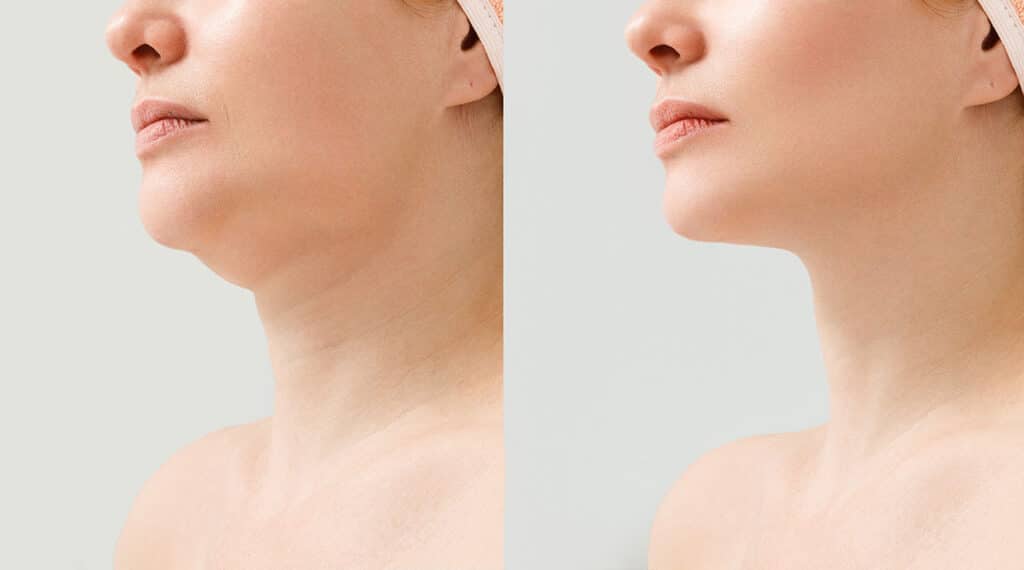
Final contour and skin adaptation are usually evident by 6 months. Use before and after shots to decide effect.
Halt compression unless otherwise instructed. Consider supplements and other treatments only after professional evaluation.
Surgical Variables
Surgical variables dictate the recovery timeline and patient experience following double chin liposuction. Double chin surgery encompasses a few different procedures, each of which modifies a different element of the neck’s anatomy.
Here’s a concise table contrasting general techniques and their impact on recovery.
| Technique | How it’s done | Typical bruising/swelling | Recovery notes |
|---|---|---|---|
| Traditional suction-assisted liposuction (SAL) | Small cannula through 2–4 discreet incisions | Moderate bruising; swelling peaks 48–72 hours | Reliable contour change; may need longer compression |
| Laser-assisted liposuction (LAL) | Laser energy melts fat before removal | Less bleeding; variable swelling | May tighten skin; quicker light-activity return |
| Ultrasound-assisted liposuction (UAL) | Ultrasonic energy breaks fat cells | Can cause higher early swelling | Good for fibrous areas; surgeon skill matters |
Technique Variations
Conventional, laser-assisted, and ultrasound-assisted methods vary in energy source and tissue effect. Two to four small incisions are ‘hidden’ around the treatment area during chin liposuction.
The size and amount of incisions determine scarring and comfort. More minimally invasive methods typically translate to less immediate pain and faster resumption of daily activities.
Results vary with surgeon competence and anatomy. Laser techniques can produce mild skin tightening, which can decrease the appearance of laxity quicker than suction alone.
Ultrasound tools can assist with dense fat or scar tissue, but they sometimes exacerbate early swelling. Surgeon preference varies; some prefer tried-and-true suction methods while others choose energy-assisted techniques based on the patient’s neck shape and skin quality.
Volume Removed
Depending on how much fat is removed, this will result in your swelling, healing, and contour changes. Small-volume procedures typically exhibit milder swelling and faster resolution, while larger-volume removal can provide more dramatic contour change but typically implies longer-lasting swelling and discomfort.
Anticipate maximal swelling during the first 48 to 72 hours. You should see significant improvement within weeks, with a final result 2 to 3 months post-surgery.
Larger volume might necessitate longer compression garment use. One clinical protocol advises wearing the garment around the clock for the initial 5 to 7 days, unless your surgeon instructs otherwise.
Chin liposuction provides permanent fat elimination assuming you maintain your weight. Surgical variables balance desired results with limits on safe removal to minimize complications.
Scar care is a different discussion since timing is determined by how your incision heals and how your surgeon wants you to treat it.
Anesthesia choice matters. Local with sedation usually has faster immediate recovery but more localized numbness. General anesthesia tends to make everyone groggy and operate on a different post-op wavelength.
Healing Predictors
Healing following double chin liposuction is reliant on a number of predictable and modifiable factors. Genetics and baseline health establish the scene, with pre- and post-surgical habits directing the plot. Gain some insights into the healing predictors. The sections below divide these factors into tissue quality, general patient health, and preoperative preparation so readers can understand what counts, why it counts, and how to act.
Tissue Elasticity
Good skin elasticity helps contouring post-lipo and visual improvement more quickly. When skin snaps back, those coveted neck and jawlines will surface sooner. When it is loose, the results may be muted and slow to settle. Age and long-term weight fluctuations are common causes of decreased elasticity.
Even slight weight gain and loss over years can stretch collagen and elastin, so the identical procedure produces different results on different individuals. Hydration and nutrition assist with skin quality. Adequate daily fluids, protein-laden meals, and nutrients such as vitamin C and zinc contribute to the repair of collagen.
Topical care, like softening moisturizers, can assist the skin surface but will never substitute for lost elasticity. For example, someone in their 30s with stable weight and good hydration often sees more rapid contour refinement than a person in their 60s who has had large weight swings.
Patient Health
General health is one of the main factors that controls how fast tissues heal. These health tips act as healing predictors: a balanced diet, sleep, and stress control help your body to heal efficiently. Chronic conditions, most importantly diabetes, decelerate tissue repair and increase the likelihood of infection.
Blood sugar control is important both prior to and after surgery. Smoking decreases blood flow, hinders wound closure, and produces higher complication rates. It should be stopped at least several weeks preoperatively and postoperatively to enhance results.
Alcohol — Limit it in the perioperative period as it can impact sleep, hydration, and immune response. Good sleep and low stress promote immune function and collagen production. Findings show that light movement reduces clot risk and aids lymphatic flow, with controlled activity diminishing swelling sooner than bed rest.
Incision protection and irritation avoidance promote orderly scar healing.
Preoperative Prep
Make a checklist to minimize surprises. Add medication review, quit smoking plan, blood tests if ordered, transportation home. Line up assistance at home for that initial 48 to 72 hour period when swelling and bruising can be at their worst. Things like cooking and caring for children matter.
Set up your recovery zone — with head pillows, compression garments to manage early edema, soft foods and accessible supplies. Healing predictors: stock soft foods and fluids for those initial days where chewing or swallowing is just plain weird.
Adhere to surgeon directions on compression wear, activity restrictions and incision care. These minimize complications and maximize your momentum toward the final result. Final contour occurs around three months post-op.
Aftercare Rules
Aftercare for double chin liposuction focuses on infection prevention, swelling management, and a slow resumption of activity. Heed your surgeon’s aftercare rules carefully. Small steps in the beginning can make a big difference in healing and your end result.
Here’s a brief list of rules for aftercare:
- Clean and dry your incisional sites. Change dressings as directed.
- Wear compression garments exactly as prescribed to reduce swelling.
- Keep your head elevated while resting and sleeping during the initial one to two weeks.
- Begin light walking within 24 to 48 hours. No heavy exercise for a few weeks.
- Drink water and maintain a protein-rich, balanced diet to assist in tissue regeneration.
- Avoid smoking and alcohol until cleared by your provider.
- Shield the treated area from direct sunlight. Use sunscreen and shade for weeks.
- Make all your follow-up visits for wound checks, progress checks, and so forth.
- Report fever, increasing pain, heavy bleeding, persistent numbness, or abnormal discharge immediately.
Compression Garments
Wear compression as instructed to manage swelling and assist the skin in conforming to new contours. Most surgeons recommend you wear it constantly for a few weeks, taking it off only to wash the garment or as permitted briefly for shower breaks.
The garment should support your tissues, not pinch. If it feels numb, cold, or causes tingling, call your clinic and have them check the fit and circulation. Wash your clothes often with gentle soap and air-dry to minimize bacterial growth.
No matter how inconvenient it is, carry a second pair if you have to swap out one while it dries!
Head Elevation
Elevate your head during sleep and rest to promote fluid drainage and minimize swelling. Maintain elevation with extra pillows or a wedge pillow as sleeping flat can extend puffiness.
Do not bend forward or tilt the head down below your heart when dressing or retrieving objects as this can cause additional facial swelling. Generally, this elevated position matters most for the first one to two weeks after surgery, but your surgeon may increase that timeframe depending on your individual healing process.
Physical Activity
Don’t do rigorous exercise until your provider gives you the green light. Patients are typically advised to avoid high-intensity workouts and heavy lifting for a few weeks.
Begin with light, brief strolls in the first 24 to 48 hours to promote circulation and reduce clotting risk. Ramp up activity according to your body and your surgeon’s schedule. Incremental steps minimize stress on healing tissues.
Stay away from contact sports and anything that may potentially impact the chin until tissues are completely healed and you have clinical clearance.
Complication Signs
Complication signs following double chin liposuction are changes that surpass anticipated swelling, bruising, and temporary numbness. Watch for these findings and respond immediately if you notice something suspicious. Here is a quick checklist to reference when monitoring recovery.
- Increasing or new swelling after initial improvement
- Soft, squishy bulges or areas that feel fluid‑filled
- Clear or bloody drainage from incision sites
- Severe pain not helped by prescribed meds
- Spreading redness, warmth, or pus near incisions
- Fever over 38.3°C (101°F), chills, or flu-like symptoms.
- Persistent or worsening bruising that does not fade
- Sudden or growing asymmetry of the chin contour
- Numbness, tingling, or weakness that does not improve
- Difficulty breathing or shortness of breath
Severe Asymmetry
Deep unevenness of the chin contour past the initial weeks can be a sign of complication. Normal post-op swelling is seldom perfectly symmetric, but if one side remains definitively larger or a new deformity develops after swelling has been expected to subside, record when you first saw it and how it evolved.

Reasons are hematoma, which is a trapped blood collection, irregular fat excision, or delayed swelling from localized bleeding. Take pictures from consistent angles and communicate any lingering asymmetry following the healing period, which can last a few weeks to a couple months.
If the asymmetry is sudden and associated with severe pain or rapidly expanding bruising, get immediate attention.
Persistent Numbness
A certain degree of numbness is common and frequently gets better over months. Record where you experience numbness and any alteration in this pattern. Numbness lasting outside the expected recovery period, newly arising tingling, burning, or radicular-sharp pain can be a sign of nerve irritation or injury.
Note any improvement or decline and the onset, whether constant or intermittent. If numbness is accompanied by weakness in your facial muscles, difficulty swallowing, or intensifying pain, call your surgeon immediately.
Maintain a journal or log of feelings, assisting clinicians in evaluating nerve regeneration.
Fluid Accumulation
Soft swelling that feels like a fluid pocket suggests seroma or hematoma. Look for localized bulges that are more compressible than normal swelling and check incision sites for clear or bloody drainage.
Measure or photograph the area and note changes in size and firmness. Small seromas occasionally resolve with time or needle drainage in clinic. Larger or expanding collections, especially those causing pain, skin tightness, or redness, require prompt evaluation.
Increasing swelling, unusual bruising, or systemic signs like fever or breathing difficulty should prompt immediate medical attention.
Practitioner Perspective
Surgeon expertise influences prognoses and rehabilitation schedules. A seasoned surgeon can frequently anticipate the probable arc of swelling, bruising, and pain according to technique, patient anatomy, and tissue quality. They know which patients will probably have rapid recoveries and who will require closer follow-up. That helps set realistic timelines.
The first day is often the worst for discomfort. The first week requires rest and simple care. At two weeks, many patients see meaningful change. Final results take three to six months. Trust a surgeon who breaks these phases down and provides quantifiable milestones so you can monitor progress without ambiguity.
Practitioner skill directly impacts complication rates and cosmetic results. A steady hand and good judgment minimizes trauma to tissues, decreases bleeding and bruising, and limits surface irregularities that can prolong healing.
Take, for instance, a surgeon who utilizes minuscule-sized cannulas and delicate suction — they’re likely to induce less post-op swelling than one wielding larger instruments. Skill counts in preventing nerve or skin complications that can add weeks or months to trauma recovery. Inquire about the surgeon’s submental liposuction case volume, examine before and after photos of similar patients, and verify how they handled any complications.
Custom aftercare plans accelerate healing and enhance results. Aftercare should encompass wound care, compression instructions, activity restrictions, and nutritional guidelines. Early care often implies a liquid or very soft diet for the first week to lessen jaw strain.
This combined effort helps minimize tension in the neck and chin when healing first begins. Pain control usually shifts quickly. Narcotic pain meds are often stopped by one week and replaced by acetaminophen or NSAIDs as appropriate. Compression garments, when worn as directed, assist in minimizing swelling and contouring the area.
The timing for returning to work and exercise should be aligned with the patient’s occupation and baseline level of fitness. Regular contact offers comfort and actionable guidance. Routine follow ups allow the surgeon to monitor incision sites, swelling and contour development.
They can then adjust care accordingly if necessary. At two weeks, most swelling and bruising begin to subside and initial results are seen, at which point clinicians can direct massage, skin care or lymphatic techniques if warranted. If there is residual swelling or tightness, anticipate advice on patience and conservative measures.
Most patients are back to full function at three to four weeks, and the final aesthetic settles over three to six months. Plain, immediate responses from the practitioner alleviate stress and enable patients to adhere to the regimen.
Conclusion
Double chin liposuction recovery. Swelling drops most in the first two weeks. Bruising goes away in ten to fourteen days. Tightness and numb spots relax over four to twelve weeks. Final shape appears by three to six months. Great outcomes build on accurate surgery, consistent aftercare, and healthy practices such as sleep, gentle activity, and low-sodium nutrition. Be alert for increasing pain, fever, heavy bleeding, or asymmetric numbness and contact your surgeon quickly. In one instance, a patient who left the compression band on and walked every day experienced swelling reduced by half at week two. One who missed follow-up had delayed healing. Schedule your follow-up, obey the guidelines, and reach out to your care team for concerns or questions. Book your check-in now.
Frequently Asked Questions
How long is recovery after double chin liposuction?
The majority of individuals are back to normal activities within 3 to 7 days. Swelling and bruising subside over 2 to 6 weeks. Final results show by 3 to 6 months. Stick to your surgeon’s schedule for optimal results.
Will I need a compression garment, and for how long?
Yes. A compression band is typically needed for 1 to 4 weeks. It minimizes swelling, promotes skin retraction, and assists with contouring the jawline. Wear it as directed.
When can I exercise again after the procedure?
Light walks are okay after 24 to 48 hours. No intense exercise or heavy lifting for 2 to 4 weeks. Return to full activity only after your surgeon clears you.
What common side effects should I expect?
Prepare for swelling, bruising, numbness and mild pain. These symptoms subside within a few weeks and peak during the first week. They are normal, but call your surgeon for any odd changes.
How do I know if I have a complication?
Go to urgent care if you have severe pain, spreading redness, fever, heavy bleeding, or unusual discharge. These could be signs of infection or other complications that require immediate care.
Can the fat come back after liposuction under the chin?
Liposuction eliminates fat cells permanently in the treated location. If you gain a lot of weight, the remaining fat cells can enlarge and affect the appearance. Keep your weight stable for permanent results.
How do I choose a qualified practitioner for this procedure?
Select a board-certified plastic surgeon or otolaryngologist with neck liposuction experience. Check out before and after pictures, patient testimonials, and inquire about complication rates and aftercare. Trust and transparent communication are important.