Key Takeaways
- Recognize warning signs of BBL complications and watch for breathing changes such as shortness of breath, chest pain, coughing, or blue lips. Seek emergency care immediately if these occur.
- Consider severe, worsening pain that doesn’t respond to medication or is accompanied by swelling or firmness a warning to reach out to your surgeon immediately.
- Take new or spreading skin discoloration, foul-smelling discharge, or persistent fever over 38.3°C as emergency warning signs that may signal infection or tissue compromise.
- Look at both sides to check for abnormal, quickly growing, or firm swelling and record changes with photos, temperature, and pain notes to show your care team.
- Be mindful of psychological indicators such as compulsive checking, ignoring your instinct, or external coercion and reach out for help if they disrupt healing or choices.
- Follow a clear action plan: document symptoms, contact your surgeon with details, and go to the emergency room for life-threatening signs such as severe breathing problems, chest pain, confusion, or very high fever.
Bbl warning signs to watch for
Some of the most common signs are extreme pain, sudden shortness of breath, high fever, excessive swelling and discoloration of the skin surrounding the treated area.
Early detection helps doctors act quickly and reduce health risks.
Be BBL aware and get checked if any of these signs manifest days to weeks post surgery for prompt care and recovery!
Critical Warning Signs
Fat grafting, such as BBL, has established risks. Recognizing the critical warning signs early can reduce lasting damage and enhance your ability to recover. Here are the major warning signs, what they signify, and when to get emergency care.
1. Breathing Changes
Any new shortness of breath, sudden onset difficulty breathing or chest pain after surgery is a critical warning sign for a possible pulmonary issue and requires urgent evaluation. Fat embolism, which can happen during or in the hours after the operation, may present with sudden cough, racing heartbeat or blue lips.
These signs may worsen with exertion or lying down and may be accompanied by disorientation or loss of consciousness. If so, dial 911 immediately. Keep in mind that fat embolism is uncommon, occurring in 0.06% of cases with the subcutaneous technique, but it is potentially lethal, so it is better to be cautious.
2. Severe Pain
Expect moderate soreness where fat was removed and placed. Intense, unrelenting pain that gets worse over time is not normal. Sharp, stabbing pain that does not ease with prescribed medication should be reported promptly.
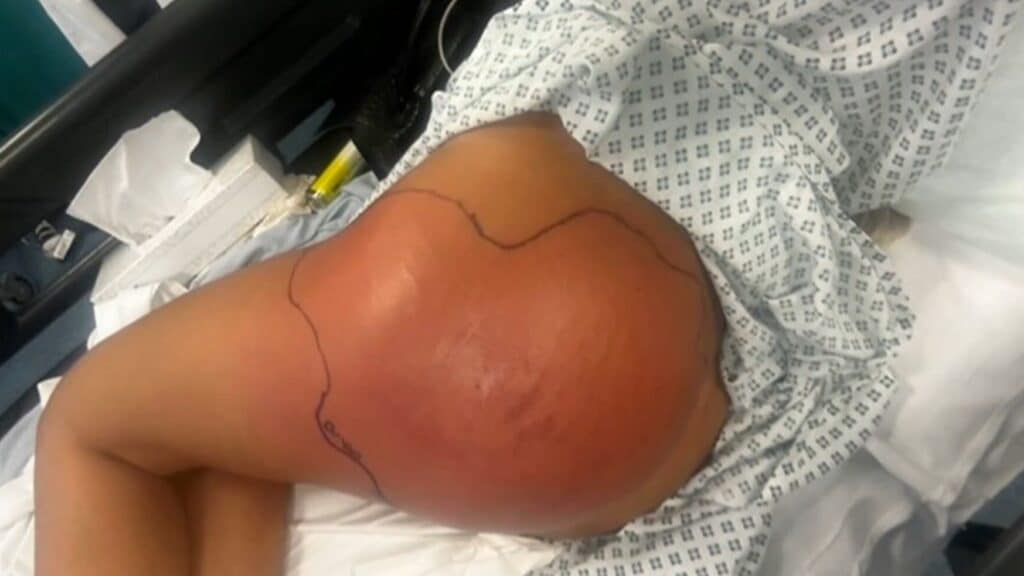
Pain combined with swelling, redness, or a hard, firm area in the buttocks or thigh may signal tissue trauma, infection, or fat necrosis that requires prompt evaluation and treatment.
3. Skin Discoloration
Be alert for new red blotches, purple patches, or dark areas in or around incisions or in the buttock tissue. Pale, cold, or blue skin can signify compromised blood flow or an embolic event.
Redness that is spreading or streaks are indicative of infection or strong inflammation. If discoloration is accompanied by any swelling, increasing warmth, or intensifying pain, get medical attention immediately.
4. Unusual Swelling
Swelling tends to be at its worst around day 5 to day 7 and often appears more severe than it actually is. Still, uneven, very hard, or quickly increasing swelling is not normal.
Swelling that is hot, tight, or causes severe pain can be a sign of infection or a hematoma. Swelling that is unrelenting or suddenly worsening beyond normal healing time, or associated with numbness or skin changes, requires evaluation.
5. Foul Discharge
Yellow, green, or foul smelling drainage from incision sites almost always indicates infection. Yellow, green, cloudy, or increasing discharge and wounds that keep weeping are worrisome.
Any bad smell or odd color calls for contacting your surgeon or seeking urgent care.
6. Persistent Fever
A low-grade fever under 38 °C within the 48 hours can be normal. Fevers exceeding 38.5 °C, persisting for greater than one day, or associated with chills, night sweats, redness or discharge cause concern.
Fever in combination with other warning signs may indicate systemic infection or sepsis and requires immediate attention.
Normal vs. Abnormal
Typical BBL healing involves expected swelling, bruising, discomfort, and fluid seepage. These signs have a familiar time course and typically resolve with rest, compression, and pain management. Abnormal findings differ in severity, character, or timing and can be indicative of infection, hematoma, seroma, vascular injury, or fat-related complications.
Apply the timeline below and specific criteria to determine when to seek care.
Discomfort
Some mild soreness, tenderness, and stiffness in the buttocks and donor sites is normal. Pain is usually moderate for the first 5 to 7 days, then improves in 2 to 3 weeks. Mild soreness may persist for 6 to 8 weeks.
Anticipate temporary spikes in soreness with movement, prolonged standing, or sitting without adequate padding. Discomfort that increases, radiates away from the surgical site, or becomes stabbing in nature is abnormal.
If pain continues to worsen despite medication, or if it hinders sleep and your daily activities, call your surgeon. Pain that doesn’t observe the typical early reduction, or new severe pain manifesting later needs urgent review.
Track how pain responds to rest and meds. If analgesics and limited activity relieve symptoms in 24 to 48 hours, that suggests normal healing. If not, note timing, triggers, and any new symptoms like fever or numbness to report.
Bruising
Mild to moderate bruising about the buttocks and liposuction areas is normal, frequently peaking the first week. Colors transition from red to purple, then green and yellow over days to weeks. Anticipate the majority of bruising will resolve within two to three weeks.
Bruising that expands rapidly, becomes raised, or turns unusually dark may indicate a hematoma. If bruises are associated with increasing pain or firmness, document size and take photos. Bruising that persists without visible improvement after several weeks, especially with pain, should be evaluated.
Sudden widespread bruising or a quickly expanding hard area are red flags. These can indicate vascular injury or internal hemorrhage and require urgent drainage or imaging.
Fluid
On it, small drainage from incision sites during the first few days is common. Serous (clear or light yellow) fluid may reduce rapidly. Small pockets of fluid (seromas) can build up and feel squishy.
Persistent, heavy, or colored drainage—cloudy, green, or pus-like—suggests infection. Any fluid with an offensive odor or spreading redness and warmth should have you immediately contact a clinician.
Fluid resulting in significant local swelling or hardening that won’t soften might require aspiration. Be on the lookout for asymmetric swelling, fever greater than 38.3 °C, acute severe pain, shortness of breath, or tachycardia.
These are signs that demand urgent care. Final results take 3 to 6 months to appear. Firmness or mild asymmetry early on can be normal as fat settles and scar tissue forms.
The Psychological Red Flag
Psychological complications can sabotage BBL recovery as easily as physical ones. Here are typical symptoms to be on the lookout for that can indicate emotional distress or toxic therapeutic dynamics. THREE — The Psychological Red Flag — Take these seriously. Mental state colors judgment, phantom pain, and compliance with your doctor.
- Chronic anxiety, panic attacks, or flurries of thoughts about healing and outcomes.
- Psychological red flag – obsessive checking of wounds, photo comparison, or progress weighing.
- Understating or denying pain, blaming deteriorating symptoms on normalcy, and going against physician advice.
- Abandoning support systems or becoming immediately secretive about how recovery is going.
- Being pressured by your peers or online groups to cover up problems or to recover faster.
- Be wary or uncomfortable with a therapist who makes promises, confesses too much, or is obviously untrained.
- A therapist who’s fixated on one technique appears patronizing or bristles at your input.
Obsessive Monitoring
Checking incisions obsessively, comparing pre/post-surgery photos every hour, or scrolling forums looking for reassurance can become a problem. What begins as mindfulness can devolve into an echo chamber of uncertainty. When checking drives up anxiety, decreases sleep, or prevents you from work or chores, it has entered dysfunction.
Overly self-monitoring can make you less adherent to medical advice. You might ignore rest because an image looks “off” or request unnecessary interventions. Set limits: decide on specific times for wound checks and one trusted source for updates, like your surgeon’s office.
Experiment number two: If online feedback feeds panic, hit pause on social browsing and professional follow-up instead.
Dismissing Intuition
To ignore a gut feeling, escalating pain, uncommon swelling, or numbness is risky. We tend to rationalize symptoms—‘it’s fine’ or ‘I’m being dramatic’—especially when we want to feel better quickly. This inclination has the potential to postpone treatment and exacerbate results.
Trust instincts when they persist. Speak out on follow-up calls, document symptoms with dates and photos, and pose explicit questions. If a therapist or clinician minimizes your worry, that’s a red flag.
Therapists shouldn’t guarantee miracles or engage in self-disclosure that turns the attention back to you. An untrained practitioner or someone forcing one approach is dangerous. Your gut feeling about a therapist is important. If seeing them feels wrong, they probably aren’t a good fit.
Social Pressure
Friends, family, or online communities can influence what feels “normal.” Advice telling you to conceal issues, deny dangers, or push work to satisfy superficial deadlines is destructive. Social comparison, comparing your recovery to polished posts, warps reality.
The psychological red flag is that pressure to conform will make you skip requesting assistance to save face. Instead focus on health, not getting approval. Discuss fears with a listening clinician.
If a therapist or peer is dismissive, seek a second opinion or find a different therapist who shows empathy and flexibility.
Recovery Timeline
The recovery timeline details common stages following a BBL so readers can identify typical progress and red flags. Below are the common stages from immediate post-op through long-term healing, including key milestones for swelling, pain, and activity, along with an easy timeline chart to help identify deviations.
First 48 Hours
It is vital to observe for signs of breathing problems, serious pain, or profuse bleeding. Pain and swelling tend to peak early, so take your prescribed pain medication as directed and keep drains and dressings separated as they recommend.
Wear compression garments at all times unless otherwise specified. Movement should be limited. Take short, slow laps around the house just to decrease the risk of clots, but do not sit on your buttocks at all.
Hydration and rest nurture recovery. Shoot for consistent fluids and protein-heavy meals. Be alert to abrupt shortness of breath, chest pain, or a racing heartbeat. These necessitate urgent medical attention as they could be a manifestation of a pulmonary embolism.
Inspect incision sites frequently for excessive bleeding or fluid accumulation.
Week One
This week is really about protecting graft sites and getting through peak swelling, which typically occurs within the first week. Anticipate bruising and stabbing soreness that frequently starts to fade around day 14 into a dull ache or itch as nerves heal.
Maintain compression and wear your BBL pillow once sitting is permitted. Numerous patients continue to deny themselves ‘direct’ sitting and instead either shift their weight or opt for a modified seat.
Go to postoperative checkups to ensure no infection or collections of fluid. Fever, spreading redness or malodorous discharge are alarms requiring immediate attention. Most patients are off their feet but still resting the bulk of the time.
Light walking promotes circulation but no straining. Arrange a return to desk work around day 10 to 14, with breaks so as to not place pressure on the grafts.

Month One
At four weeks, a lot of patients start to see a lot of improvement. Most feel much better by one month. Resume light activities as cleared, but no intense exercise or positions pressing the buttocks.
The ‘fluffing phase’ commonly starts at six to eight weeks. Tocks soften and round as fat grafts settle into place. Watch for lumps, hardness, or numbness. These can signal fat necrosis or nerve problems and may require imaging or intervention.
Swelling usually subsides over weeks 2 to 6 and 3 to 6 months. Mild residual swelling may persist for up to three months. Fat graft stability and final shaping take place between months 3 and 6, with softer, final results apparent by six to twelve months.
Timeline chart (simple)
Days 0–2: peak pain and swelling. Days 3–7: peak swelling continues. Days 10–14: sharp pain turns into a dull ache. Weeks 2–6: swelling decreases. Weeks 6–8: fluffing phase. Months 3–6: results settle. Months 6–12: final softening.
Personal Risk Factors
Personal risk factors impact how a BBL might go and what signs to be on the lookout for. They modify the risk of complications, influence recovery, and direct pre- and post-operative decisions. Checking over your health, habits, and medical history helps identify elevated risk and informs safer scheduling.
- Underlying health conditions:
- Cardiovascular disease, hypertension, or unstable blood pressure raise surgical and anesthetic risk. Stable blood pressure before, during, and after surgery reduces problems.
- Diabetes and blood sugar control slow healing and increase risk for infection, including uncommon infections such as Mycobacterium abscessus that can require months of treatment.
- Coagulation disorders, prior DVT, or family history of clots put you at risk for post-op clots.
- Autoimmune disease or chronic steroid use can complicate wound healing and increase complications.
- Lifestyle factors:
- Smoking impairs blood flow, delays healing, and raises infection risk. Quitting several weeks before surgery is advised.
- Malnutrition, vitamin deficiency, or inadequate protein intake impair tissue repair and immune response.
- Inactivity or a sedentary lifestyle raises the risk of DVT, particularly when you’re immobile for long periods of time following surgery or on an extended flight.
- Heavy alcohol use impacts liver and clotting function and can interact with medications.
- Surgical history and anesthesia reactions:
- Prior cosmetic surgeries, scar tissue, or complications from anesthesia signal higher risk for repeat procedures.
- If there has been a history of bad reactions to anesthesia or prolonged recovery, discuss with the anesthesiologist and surgeon.
- Prior fat grafting complications or infections warn against large-volume fat transfer, which increases the risk of fat embolism.
- Body-related factors:
- Large-volume fat transfer increases the chance of fat entering the circulation. Gluteal vein anatomy matters because these veins sit under negative pressure and can suction fat if punctured.
- Major weight fluctuations alter tissue quality and result predictability. Stable weight prior to surgery produces better results.
- Body shape and fat distribution restrict the amount of safe fat available for transfer and impact surgical planning and risk.
How these factors manifest post-surgery. Pain and swelling are standard, but asymmetrical or intense pain, localized swelling, or unusual bruising can indicate hematoma, seroma, infection, or fat embolism.
Long periods of immobility, like travel post-surgery, increase DVT risk. Resume light activity and do not take plane rides until given the all clear. Post-operative care, follow-ups, antibiotics, and rest reduce risks and ensure early detection of issues.
Your Immediate Action Plan
Post BBL, timely treatment of warning signs can save your life. Prioritize your steps with the checklist below according to how urgent the symptom is, and don’t wait if the sign is rapidly worsening or life threatening.
Document Symptoms
- When each symptom was first noticed, note changes hour by hour if severe.
- Precise body location indicates left, right, or central and records spread if any.
- Type of symptom: pain (sharp, dull), swelling, redness, heat, drainage, odor, numbness, or color change.
- Triggers or relief measures attempted and their impact, such as sitting, lying, walking, and medications.
- Medicines taken, doses, and times include antibiotics, pain meds, and blood pressure drugs.
- Vital signs include temperature in degrees Celsius, heart rate, respiratory rate, and blood pressure readings when possible.
- Any anaphylactic reactions or new rashes after medications or dressings.
To take obvious photos every day from the same angles and in the same light to demonstrate progression of swelling, bruising, wounds, and changes in skin color. Keep a pain diary on a 0 to 10 scale and record temperatures twice a day, in the morning and at night.
Maintain a straightforward table of date, time, symptoms, medications, vitals, and photo file names for easy reference when reviewing with your doctor.
Contact Surgeon
Contact your plastic surgeon immediately for unusual symptoms that are new, intensifying, or beyond anticipated healing trends. Keep it brief, factual, and provide your dated photos and symptom table to help them triage.
Follow surgeon directions exactly: continue prescribed antibiotics, wear the compression garment as instructed, and avoid sitting directly on the buttocks for several weeks. Go to follow-up visits.
Surgeons depend on these to see if you have any infection, fat necrosis, or vascular issues. If instructed to change wound care or medications, do so right away and verify how to track your response.
Keep the lines of communication open and continue to report any changes between visits.
Seek Emergency Care
Go to the emergency room without delay for severe or sudden symptoms: intense unrelieved pain, shortness of breath, chest pain, confusion, fainting, or a high fever.
Don’t wait if you notice fast-spreading redness, skin that appears pale or dusky, profuse bleeding, or malodorous drainage. Tell emergency staff you recently had a BBL and list PMH, current meds, and recent abx.
Keep your blood pressure down as much as possible; bring your own readings if you have them. Emergency care might stabilize you, but don’t substitute surgical follow-up.
Get emergency and surgical teams communicating to inform next steps.
Conclusion
A couple of obvious warning signs require urgent post-bbl care. Sudden breath shortness, chest pain, heavy bleeding, severe pain that grows, fever above 38°C, and any strange skin color change all require immediate attention. Keep tabs on your recovery daily. Record pain, swelling, respiration, and wound appearance. Have a friend or family member check every day. Report any sudden change to your clinic immediately.
Minor problems typically resolve with rest and basic care. Serious signs require urgent help. Follow your pre-surgery created emergency plan. Have contact numbers, clinic information, and transport on standby. If you feel uncertain, get medical assistance immediately.
Frequently Asked Questions
What are the most urgent warning signs after a BBL?
Severe shortness of breath, chest pain, sudden fainting, uncontrolled bleeding, or extreme swelling and severe pain could indicate life-threatening complications. Get emergency care right away.
How can I tell normal swelling from a dangerous infection?
Normal swelling is slow and gets better after a couple of days. Fever greater than 38°C, increasing redness, warmth, pus, or worsening pain indicate infection. Call your surgeon immediately.
When should I be worried about blood clots after a BBL?
Concern if you experience sudden leg pain or swelling, warmth, or shortness of breath. These are DVT or PE symptoms. Head immediately to the emergency room.
What psychological signs are red flags during recovery?
Impairing depression, anxiety, suicidal thoughts, or extreme body-image distress. Reach out to your surgeon and a mental health professional without delay. If you’re at immediate risk, dial emergency.
How long is the typical recovery timeline to watch for issues?
The majority of early risks manifest themselves within the initial two weeks. Healing continues over six to twelve weeks. Persistent or worsening symptoms at any point warrant medical attention.
Do personal risk factors change which warning signs I should watch for?
Yes. Being overweight, smoking, past blood clots, bleeding disorders, or some medications put you at higher risk. Detail your complete medical history with your surgeon and keep a close tab on symptoms.
What should my immediate action plan be if I notice a warning sign?
Cease activity, call your surgeon and for severe signs, call urgent care or emergency services. Have emergency contacts and medical records at your fingertips. The sooner, the better.