
Key Takeaways
- At six weeks, use photos and notes to compare the current shape and volume with earlier recovery stages to confirm swelling is diminished and skin elasticity is improving.
- Here’s how to know if your fat graft is settling normally six weeks after a BBL.
- Check sensation, contour symmetry, and softness of the tissue by gentle palpation and inspection in the mirror for any hard nodules or new asymmetry to report to your surgeon.
- It is important to monitor the area and watch for warning signs such as increasing redness, warmth, drainage, fever, sudden size or color changes, and persistent swelling that isn’t alleviated by elevation or compression.
- Modify your schedule by maintaining advised compression, steering clear of direct buttock pressure, and cautiously returning to mild activity as long as it doesn’t worsen pain or swelling.
- Attend follow-up as scheduled, bring photos or a recovery journal and targeted questions so your surgeon can evaluate fat survival and advise any necessary care.
Six weeks after a BBL, typical fat graft settling exhibits consistent contour, slight hardness and localized edema that diminishes over time. Usual indicators are consistent contour, firm areas smoothing out, and weight fluctuations instead of rapid loss. Redness or increasing pain can indicate an issue. Recovery is individual, so compare your progress to prior images and heed your surgeon’s timeline for care and checkups.
Six-Week Baseline
Six weeks post-BBL is an important milestone. At this point, the body has passed the initial inflammation phase and most patients can get a better sense of how the grafted fat is settling. Compare current appearance, feel, and function to the immediate post-op look to determine if healing is on track.
Compare your current buttock shape and volume to the initial recovery phase to assess progress.
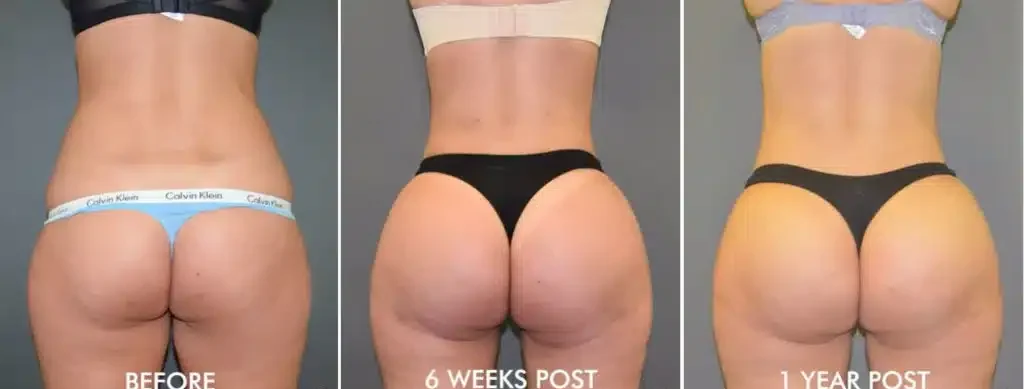
About six-week baseline. At two weeks, the buttocks often appear overfilled, lumpy, and super firm from swelling and initial fluid. At six weeks, a normal course exhibits a more gentle, organic outline and a slight decrease in perceived volume as residual swelling subsides and some fat cells do not survive. Smoother transitions at the waist and hip crease, less obvious bulges, and more symmetry side to side occur. If one side stays significantly larger or abnormally firm than the other, or dents develop where there should be fullness, take photos and call your surgeon. For example, if you went from an obviously rounded, tight shape at week two to a subtler, more even curve at week six, that usually indicates expected resorption and settling.
Note reduction in swelling and bruising as a sign of normal healing at six weeks post-bbl surgery.
Swelling and bruising are typical early symptoms. By six weeks, bruises are mostly resolved and discolouration is minimal. Swelling should have subsided significantly, although it can linger mildly in the lower buttocks/thigh junction. Persistent, spreading, or uneven swelling, new redness, warmth, or pain can indicate fluid collection, infection, or other concerns and warrants immediate evaluation. Practical check: measure circumference at fixed points now and compare with measurements taken during earlier recovery. A 5 to 15 percent reduction in measured girth by six weeks can be typical, but this varies by individual and surgical technique.
Track changes in skin elasticity and firmness to determine if the fat graft is integrating well.
- Pinch test: Gently pinch skin and underlying tissue. Normal integration feels pliable with no hard nodules.
- Smoothness check: Run a flat hand over the buttock. Skin that glides without catching on tethered bands suggests good tissue remodeling.
- Bounce and recoil: Press lightly and release. Healthy skin will return to shape quickly, showing preserved elasticity.
- Temperature and sensation: Normal grafting brings slight numbness that slowly returns. Persistent cold spots or elevated warm areas could use examination.
- Palpable irregularities: Small soft lumps can reflect uneven fat survival. Lumps that are either large, painful, or very hard may need to be checked for fat necrosis or seroma.
Normal Settling Indicators
Six weeks post-BBL, the grafted fat should be showing normal settling indicators of integration into native tissue. These signs tip you off to what’s normal settling versus trouble. Employ hands-on, visual, and symptom monitoring to create a coherent image over a few consecutive days.
1. Tissue Softness
Gently palpate the buttocks for a supple feeling. This is an indication that grafted fat has survived and is mixing with native tissue. Normal settling signs include spots that were hard in the first 2 to 4 weeks which will frequently be softer-feeling now as post-operative swelling recedes and fluid balances normalize. If the firmness has diminished unevenly, highlight those areas and juxtapose them with pictures or observations recorded previously. Some localized firmer areas can still be normal at six weeks, particularly adjacent to injection sites, but large hard, stone-like areas are not common and need to be reported.
2. Volume Stability
Weigh size and, if possible, measure at greatest width and take them down. Normal settling signs: Anticipate a handful of volume drop from peak post-op volume because the instant swelling and retained fluid are dissipating and only the surviving fat remains. Steady size over a few days is a sign of good retention. Abrupt volume decreases or a gradual shrinkage lasting for more than a week are signs of heightened fat reabsorption or a deeper problem. Take photos in the same light and distance and maintain a brief journal entry recording clothing fit and how voluminous you feel.
3. Skin Sensation
Evaluate skin sensation by gently stroking various regions and observing any side-to-side discrepancies. Numbness should be decreased from the first month. Tingling or pins-and-needles could be present as nerves heal. If feeling comes back slowly and some areas regain more sensitivity, that’s typical nerve repair. Persistent, total numbness over large regions or new stabbing, electric pain are not normal and require clinician evaluation. Compare sensations while sitting, standing, and lying down to capture activity-related differences.
4. Contour Symmetry
Stand in front of a mirror and examine the edges and hips, back where the buns join the hips and thighs. Flat, reflected shapes with gentle slopes are indications of uniform settling. Palpate along the surface for dips or bulges, specifically any new irregularities that are different from previous weeks. Small asymmetries are not unusual but should not be fluctuating at six weeks. Note any significant asymmetry to address at follow-up.
5. Minimal Pain
Follow daily pain on a 0 to 10 scale, anticipating close to zero or mild scores. Mild post-activity soreness is to be expected and will dissipate with rest. Requiring regular pain relief at 6 weeks is unusual. Any ongoing deep pain or increasing severity should be urgently medically evaluated.
Warning Signs
Six weeks post-BBL and all of the usual settling is taking place. Some of these signs are not good and may be indicative of complications. Watch the field and report anything that slides from consistent progress. Here are some specific warning signs to watch that may call for more immediate follow-up with your surgeon or clinic.
Hard Nodules
Palpate both cheeks softly for any rock-hard lumps under the skin. Palpate along the lines where fat was injected and observe whether nodules are stationary or free moving. Fixed, enlarging, or progressively tender lumps require swifter appraisal.
Small, painless lumps can be common as transplanted fat becomes established and scar tissue develops. These might mellow over weeks. Any larger nodules that are painful, warm, or growing in size are suggestive of fat necrosis, infection, or trapped fluid and should prompt imaging or clinical review.
Keep tabs on every nodule you have — in terms of size and location. Use a simple log: date, approximate size (in millimetres or centimetres), whether it hurts, and if it feels hard or spongy. Compare entries over multiple days to observe whether a lump decreases, remains the same, or increases.
Asymmetry Changes
Compare both cheeks visually and by feel for any new or worsening asymmetry in contour. Stand with feet together, back and side views. Little shifts might be apparent in your clothes or when you sit.
Record any abrupt contour changes with photographs shot from the same angle, at the same distance, in similar clothing. Note any change in fit: waistband pulls, new bulges, or one cheek that looks flatter. These may indicate patchy fat survival, hematoma, or localized edema.
If one side becomes significantly larger or softer, it could be a seroma or collection. If it is stiffer, it might be a retained graft or fibrosis.
- sudden bulging on one side
- new dips or hollows in the contour
- visible difference when lying down versus standing
- clothing that no longer fits evenly
Persistent Edema
Be on the lookout for swelling that persists despite rest, elevation, and compression garments. Normal post-op swelling should be trending down. Swelling that remains the same or worsens after six weeks is a warning.
Pop on any swollen areas to test for pitting edema. If a dent or indentation holds for up to a few seconds, note it. Swelling that extends from the buttocks into the thighs, lower back, or groin is concerning for lymphatic disruption, fluid collection, or infection.
Keep a daily record of swelling: time of day, how it feels, whether compression helps, and any new symptoms like tightness or skin color change. Consult a doctor if edema is serious, painful, or associated with fever.
Expert Insights
Six weeks post BBL is an important milestone. By now, initial swelling has typically subsided, early fat reabsorption has taken place, and the transplanted tissue is beginning to regain its circulation. Anticipate lumps, firmness and size fluctuations throughout this period. Small pockets of softness or minor dimpling may occur as fluid drains and fat cells either live or are reabsorbed. Hard nodules that persist, in combination with extreme asymmetry or signs of infection at 6 weeks, warrant immediate evaluation by your surgeon.
Review common timelines for fat graft settling and what to expect at six weeks
Weeks 0–2: Maximal swelling, bruising, and sensitivity. Avoid sitting directly on the buttocks and follow compression and positioning instructions. Weeks 3–6: Swelling starts to drop. Some volume loss is common as nonviable fat is resorbed. Tissue begins to soften where fat survives. Week 6: Roughly 50–70% of final settling is underway for many patients, but individual results vary. Expect moderate asymmetry and texture changes. Range of motion and light activity usually improve. Months 3–6: Continued maturation, with vascular integration more established and contour becoming more stable. After 6 months: Most residual change settles. Final volume and shape are clearer. Example: A patient who loses 20% volume by week 6 may still lose an additional 5–10% by month 3.
Understand how surgical technique and fat transfer method affect recovery
It’s how the surgeon harvests, processes and injects fat that matters. Trauma-minimizing gentle liposuction preserves more viable cells. Low-pressure centrifuge or decanting methods help keep fat healthy. Aggressive processing can decrease survival. Small, multi-plane aliquots deposited with gentle layering promote greater contact with the recipient tissue and minimize the risk of clumping or nodule formation. For example, using micro-droplet injections across several tissue planes often yields smoother settling than large bolus injections. Surgeon skill with symmetry, volume planning and pressure control impacts firmness, contour and the recency of visible improvement.
Learn about the role of blood supply and vascular integration in fat survival
Surviving fat is dependent on rapid revascularization. Within days, capillaries start to invade grafted fat. At 6 weeks, this network is still maturing. Regions with good circulation hold more fat and are softer to the touch. Poorly perfused areas, such as too-tight pockets or scar tissue, exhibit greater resorption and could look sunken. Smoking, uncontrolled diabetes, or drugs that compromise circulation decrease vascular ingrowth and enhance loss. Practical steps to support blood flow include maintaining hydration, avoiding nicotine, and following activity guidance that promotes gentle circulation without compressing grafts.
Routine Adjustments
Around six weeks, swelling is typically on the downswing and the fat grafts are maturing. Little tweaks to everyday care assist in shielding the fat cells and promoting even healing. The tips below discuss how to shuffle your routine safely, how to sit and move, and how to use compression to sculpt results.
Adapt care routine as swelling subsides
- Review wound care and hygiene: keep incision sites clean, follow any antiseptic or topical instructions, and resume gentle showering as allowed. Be on alert for redness, foul drainage, or intensifying pain. These are potential signs of infection and deserve immediate attention from your surgeon.
- Modify skincare and topical products: stop any aggressive exfoliants near the grafted area and prefer mild, unscented products. Hold off on strong retinoids or acids until cleared.
- Adjust sleep and rest positions: continue lying on the stomach or side when possible. Use pillows to offload pressure and maintain comfort. Pillows and position changes can decrease pressure-induced fat necrosis.
- Progress activity in steps: increase short walks and light household tasks, avoid sitting or exercise that compresses the buttocks for extended periods. Follow responses to every change and back off if swelling ascends.
- Follow-up and documentation: Take weekly photos at the same angle and lighting. Note changes in symmetry and softness. Report concerns to your surgeon rather than guessing what is normal.
Compression Use
| Recommendation | Details |
|---|---|
| Wear schedule | Use a compression garment (faja) most of the day for the period your surgeon prescribes, often 6–12 weeks. Remove briefly to shower and to check skin. |
| Tightness guide | Start snug to control swelling; loosen gradually as you feel less pressure. Aim for firm support without numbness or tingling. |
| Avoid over-compression | If the garment causes intense pain, color change, or cool skin, remove and contact your surgeon; excess pressure can harm graft survival. |
| Material and fit | Choose breathable fabrics and garments that focus compression on the hips and abdomen while allowing gentle shaping of the buttocks. |
Sitting Habits
Employ a specially shaped BBL pillow to maintain direct pressure off the grafted zone when you inevitably have to sit. Reduce overall sitting. Stand at 20 to 30 minute intervals and prefer flat lying for longer rests. Add normal sitting in small increments again only once your surgeon says you’re clear. Be mindful of any new swelling or strange hardness. Don’t sit on the buttocks until given explicit clearance. When cleared, shift weight frequently to avoid continuous pressure.
Light Exercise
Initiate brief, mild walks to stimulate circulation and lymph flow, beginning with five to ten minutes and gradually building up. Avoid any high impact activities, heavy lifting or positions that compress your backside for the advised time frame. Include easy stretching and mobility work for your hips and lower back to avoid stiffness and bolster your posture. If activity results in increased pain or additional swelling, decrease intensity and check with your care team.
Clinical Follow-Up
Clinical follow-up at six weeks after a BBL offers a concentrated review of graft survival, wound healing, and initial contour changes. This visit enables the surgeon to observe how the transferred fat is settling, catch signs that require intervention, and provide updated care instructions to safeguard the long-term results.
Schedule and attend follow-up appointments to monitor fat graft survival and healing.
Maintain the six-week visit and any other check-ups the clinic establishes. Surgeons utilize these visits to match your shape to immediate post-op photos and observe regions of volume loss, firmness, or asymmetry that suggest uneven graft take. Anticipate a clinical follow-up of the buttocks and donor sites, light palpation to detect lumps or fluid, and an evaluation of skin color and scar healing. If your surgeon employs ultrasounds or standardized-position photos, they may use those to measure changes. Missed appointments risk delayed diagnosis of issues such as infection, fat necrosis, or seroma, which are easier to treat when caught early.
Prepare a list of questions or concerns based on your recovery experience.
Write down specific changes you’ve noticed: exact locations where volume feels reduced, new pain points, persistent numbness, or areas that feel hard. Pay attention to timing—when a symptom starts or if it intensifies after an activity. Ask about normal ranges: how much volume loss is expected, what firmness should feel like, and how to spot fat necrosis versus normal lumps that resolve. Ask about timelines for resumed exercise, massage, or compression garment changes. Inquire about scar care and sun exposure at incision sites. Clear, specific questions help the surgeon provide tailored advice instead of vague reassurance.
Bring documentation or photos of changes for your plastic surgeon to review.
Bring photos taken in consistent lighting and poses: front, sides, and three-quarter views, plus close-ups of any concern areas. Date each photo and note the garment or position used. Bring a recovery diary listing medications, antibiotic use, activities, and when symptoms appeared. If you saw another provider or had treatment, such as drainage or antibiotics, bring those records. Visual and written records let the surgeon compare and judge if changes are progressive, stable, or sudden, helping to decide if imaging or minor procedures are needed.
Follow updated instructions provided during clinical assessments to optimize long-term results.
Follow any new care steps exactly: revised massage or lymphatic drainage schedules, changes to garment wear, altered activity limits, or prescriptions for anti-inflammatories or antibiotics. If your surgeon observes regions of bad take, they will recommend delayed touch-up grafting at three to six months. Follow pre-op and post-op instructions if you go with that. Adhere to skin care, scar protection, and weight maintenance directions. Weight gain and loss can change the way fat grafts look. Following these custom-designed steps provides the highest likelihood of an enduring, natural outcome.
Conclusion
By six weeks, the graft should be softer to the touch, the contour should appear more stable, and bruises should dissipate. Little size decreases, some mild firmness, and minor numb patches are the normal course. Sudden pain, rapid swelling, hard lumps, or skin color change warrant a visit. Track transformations with photos and a basic note on feel and dimension. Follow your surgeon’s care steps and keep follow-up visits. A defined care routine aids in identifying issues early and guides healing to stay on course.
If you notice concerning symptoms or are uncertain, reach out to your surgeon immediately. If everything seems stable, maintain tender treatment and observe for changes during the following months.
Frequently Asked Questions
How do I know if my fat graft is settling normally at six weeks after a BBL?
How to tell if your fat grafting is settling normally 6 weeks after a bbl. Mild asymmetry that gets better with weeks is typical. If changes feel steady, it’s presumably settling normally.
Is some pain or tenderness normal six weeks after surgery?
Yes. Mild to moderate tenderness and occasional soreness are normal as tissues heal. Pain should steadily decrease. Persistent or worsening pain needs evaluation.
What amount of swelling is typical at the six-week mark?
Anticipate moderate residual swelling that is highly individual and area dependent. Swelling typically continues to go down over months with the most noticeable improvement occurring between weeks six and twelve.
When is asymmetry concerning and requires a doctor’s visit?
Get evaluated if asymmetry abruptly worsens, is severe, or is associated with severe pain, redness, fever, or drainage. Small, resolving asymmetry at six weeks is typically not pressing.
Can I resume normal activities and exercise at six weeks?
Light activity is usually permitted, but heavy lifting and direct pressure on the grafted area should be avoided until your surgeon clears you. Follow individualized activity instructions to safeguard graft survival.
How long before I see the final BBL results?
Final results will present themselves between 3 and 12 months. Fat needs time to settle. Anticipate some contour smoothing and softening during this period.
What signs indicate fat graft complications like infection or fat necrosis?
Be alert for worsening pain, continued redness, warmth, fever, or hard lumps that don’t soften or drain. These need immediate medical attention to exclude infection or fat necrosis.