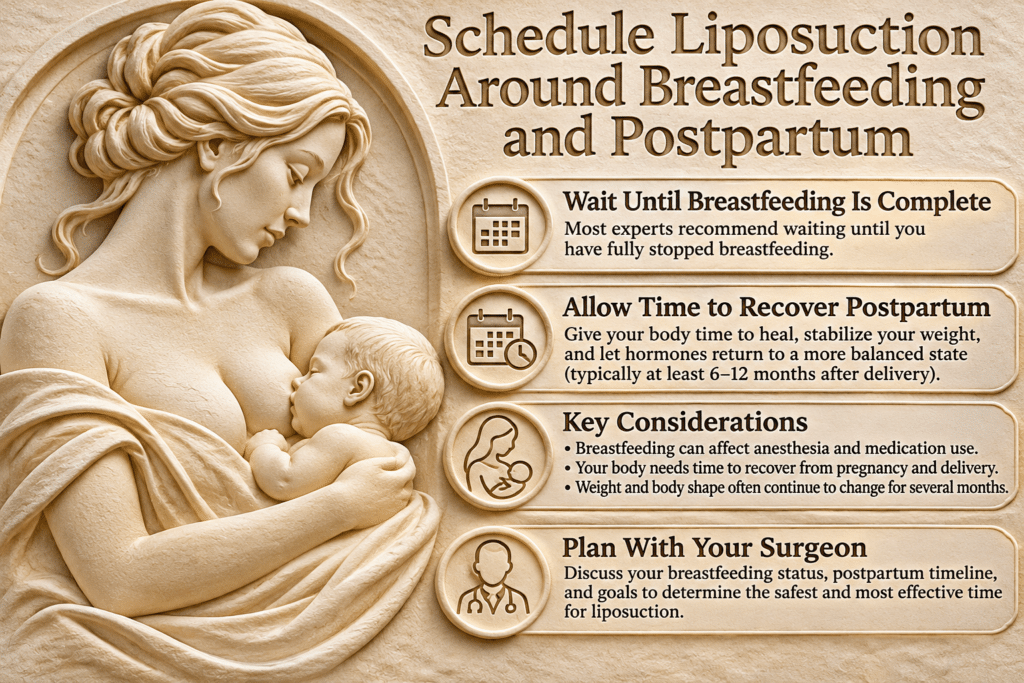
Key Takeaways
- Wait until breastfeeding has completely ceased and milk involution is finished before scheduling liposuction or breast procedures in order to safeguard healing and finalize results.
- Follow your hormone and weight stabilization by monitoring cycles for a few weeks and weight trends to support predictable surgical planning.
- Establish fluid balance and vascular normalization to minimize chances of swelling, bleeding, and bumpy contouring during and after liposuction.
- Set up trustworthy childcare and a realistic recovery strategy that includes rest and minimal lifting.
- Get a full clinical evaluation from a reputable plastic surgeon who will evaluate your tissue elasticity, abdominal muscle reclamation, and general preparedness.
- Have realistic outcomes in mind. Write down goals for the consultation. Follow pre-op medication clearance and surgeon advice.
Liposuction and breastfeeding timing refers to when it is safe to have liposuction before or after breastfeeding. Medical advice by type of procedure, anesthesia, and personal health differs. Most clinicians suggest waiting until after you’ve stopped breastfeeding and hormones have regulated for about three months. Recovery, wound care, and medication choices impact your milk supply and what your baby is exposed to. The bulk of it discusses what the research says and when you can have it done.
Procedure Timing
Liposuction and plastic surgery after pregnancy and breastfeeding – what timing is safe and optimal for the best results. Waiting gives hormones, weight, milk production, and tissues a chance to settle so surgery can be scheduled with more predictable anatomy and a lower chance of complications. Here are pragmatic considerations to help you establish a timeline and sample cases to direct decisions.
1. Hormonal Stabilization
Hormones change a lot in pregnancy and lactation, they require months to normalize towards pre-pregnancy levels. Fluctuating estrogen, progesterone, and prolactin will slow your healing and alter swelling patterns post surgery. Keep an eye on your period return and regularity as an easy marker. If you can keep your cycles regular for a few months, the hormones are probably settling as well. Most surgeons like hormone stability prior to elective procedures because it allows for predictable tissue response and more precise planning for contour work.
2. Weight Plateau
Have the surgery come after a prolonged weight plateau. If weight is still dropping or increasing, liposuction outcomes can be erratic and less long-lasting. Monitor weight for a minimum of 4 to 8 weeks. If numbers stay stable, it is a good indicator they are ready. For instance, a patient who drops 5 to 10 kg in three months should defer their body contouring until weight plateaus. A plateau lets fat removal and skin tightening align with the long-term body shape.
3. Milk Involution
Milk involution is the process by which breasts return toward their pre-pregnancy state after nursing ceases. Breast tissue, specifically breast volume and ductal tissue, is slow to shrink and become firm. Surgeons generally recommend three to six months post-breastfeeding for breast procedures, and most suggest a minimum of six months post-final delivery for mommy makeovers. Operating before involution invites bad healing and murky aesthetic results. Wait until milk has dried up and breasts are down before setting the surgery date.
4. Tissue Elasticity
Skin and tissue loosen throughout pregnancy and nursing. Elasticity bounces back at different speeds. Age, genetics, pregnancies, and breastfeeding duration all play a role. Examine skin tone and perform a pinch test during consultation to determine if tissue will re-drape well post-liposuction or if a tummy tuck is necessary. Waiting a few months provides some recoil and gives a better sense of what surgery needs to tackle.
5. Medication Clearance
Make sure to clear medications used for nursing prior to surgery to avoid the risk of interaction with anesthesia and bleeding. Many antibiotics, pain medications, and antidepressants need wash-out periods; listen to the surgeon. Maintain a postpartum medication checklist—ibuprofen, paracetamol, a few SSRIs, herbal supplements—and revisit in pre-op planning. As recommended, a drug holiday enhances security and reduces the risk of complications.
Physiological Factors
Pregnancy and postpartum introduce wide physiological changes that have a direct impact on whether liposuction and similar body-contouring surgeries are appropriately timed and safe. These involve fluid shifts, vascular changes, hormonal variation, inflammatory fluctuation, and changes in body composition. By evaluating both internal markers such as coagulation, hormones, and hydration, and external markers such as swelling, tissue firmness, and stable weight, we can determine when the body has returned near baseline and elective surgery is safer.
Fluid Shifts
Pregnancy produces marked fluid retention and redistribution, with extracellular fluid expansion and increased interstitial volume that can persist for weeks after delivery. This fluid makes it hard to judge true fat volume and tissue contours. Operating while fluid balance is still changing can yield uneven results or apparent recurrence of fullness once the fluid resolves. Wait until measurable swelling has reduced and daily weight and limb circumference are stable for several weeks. Monitor hydration status, urine output, and visible edema. The absence of pitting edema and consistent weight over a 4 to 8 week span suggest fluid normalization. Fluid shifts affect postoperative swelling and bruising, which tend to be worse if surgery occurs too soon. Examples: a woman who loses 3 to 5 kg of retained fluid in the first month postpartum may see major contour changes that would have altered surgical planning. Another who still shows ankle edema at six weeks likely needs more time.
Vascular Changes
Blood volume and vascularity go up considerably in pregnancy and can take a while to go back down. Increased blood flow and dilated vessels increase the potential for both intraoperative bleeding and postoperative bruising. Pregnancy raises thrombotic risk for several weeks postpartum, which impacts choices regarding perioperative anticoagulation and timing. Postponing surgery until the vasculature has returned to baseline improves bleeding, diminishes bruising, and enables safer anesthesia options. Vascular normalization promotes faster healing and less inflammation after surgery.
| Vascular sign | What it means | Readiness indicator |
|---|---|---|
| Normal capillary refill and reduced visible varicosities | Lower surface blood flow | Favorable for elective surgery |
| Absence of new or enlarging leg swelling | Lower thrombotic concern | Wait 6–12 weeks or as clinician advises |
| Stable hemoglobin and clotting tests | Restored blood volume balance | Safer for liposuction |
Hormone levels and inflammatory response should direct final timing. Most clinicians recommend waiting until after breastfeeding has ceased and the hormones have a chance to stabilize, usually 3 to 6 months post-weaning, with stable weight and more solidified tissue prior to liposuction.
Surgical Safety
Surgical safety for liposuction and breastfeeding timing is about getting a patient’s body and care plan prepared prior to proceeding. Women require a period of recovery from delivery and the physiologic burdens of breastfeeding. Being fully recovered lessens the likelihood of bleeding, infection, delayed wound healing, and poor cosmetic outcomes. It allows time to treat postpartum anemia, blood pressure, or infections, any of which could alter anesthesia or surgical risk.
A careful preoperative evaluation identifies lingering postpartum problems. This includes a focused history and exam for anemia, wound or breast infection, thromboembolic risk, and mental health concerns such as postpartum depression. Laboratory checks may include a complete blood count and where indicated, coagulation studies. Review of breastfeeding patterns, milk supply, and available expressed milk helps plan perioperative feeding. Discuss current medications, supplements, and any recent vaccinations. If there was a complicated delivery, highlight that to the surgical and anesthesia teams so plans can be adjusted.
Perioperative hydration and feeding plans are important for both mother and infant. Patients should continue clear liquids by mouth up to 2 hours before anesthesia to remain hydrated and lower the risk of nausea. Pump and freeze milk the week before surgery so you have a good supply while mama is hazy-eyed and unable to nurse. Hire a nanny to provide lifting, bathing, and carrying of the baby for at least a week post-surgery so you’re not bending, straining, and lifting that can hinder recovery.
When it comes to pain control and medication selection, non-opioid, non-sedating strategies are preferred. Take scheduled acetaminophen and nonsteroidal anti-inflammatory drugs when safe and use local anesthetic techniques or nerve blocks to limit systemic drugs. Nonpharmacologic measures, such as ice, compression stockings, positioning, and controlled breathing, minimize opioid requirements. If opioids are required, administer the minimum effective dose for the briefest period.
It’s useful to know about anesthesia and when to breastfeed. It takes roughly 8 to 24 hours for most newer anesthetic drugs to clear from breast milk. Our current direction is that a mother can resume feeding once she is awake, alert, and able to safely hold the baby, often within that 8 to 24 hour time frame depending on the usage of medications. For example, the safest time to get a rhinoplasty is once you’re done breastfeeding or at least after you’ve introduced solids around six months.
| Risk from poor timing | Why it matters | Effect on outcomes |
|---|---|---|
| Infection or delayed healing | Ongoing postpartum or breast issues increase infection risk | Worse scarring, longer recovery |
| Medication exposure to infant | Sedating drugs can pass into milk | Temporary infant sedation or feeding issues |
| Insufficient lactation plan | No expressed milk or caregiver | Interrupted feeding, maternal stress |
| Physical strain post-op | Early lifting or bending | Wound disruption, hernia, delayed recovery |
Recovery Demands
Liposuction recovery while breast-feeding or tending to an infant creates unique physical and emotional needs. Recovery requires attention, even if symptoms appear mild. Recovery demands include pain, swelling, tiredness, and emotional fragility, which can intersect with the already overwhelming first few months of parenthood. Anticipate good days and more difficult days; pain in those initial days is not a consistent indicator of whether recovery is on course. Swelling can linger and fluctuate throughout the day, and the ultimate contour can take months to settle.
Childcare Support
Securing dependable childcare assistance is a must for the early recovery process of plastic surgery. We have lifting restrictions during the first 4 to 6 weeks, typically 2 to 5 kilograms (5 to 10 pounds), again based on the surgery and person. Desk-working parents can return sooner than those who lift babies, stand all day, or do manual labor. Delegating practical tasks reduces stress and promotes physical recuperation.
- Carrying the baby and placing in car seats
- Lifting or changing heavy supplies (diaper bags, laundry baskets)
- Night feeds and soothing to allow longer daytime rest
- Meal prep and grocery runs, including deliveries
- House chores: vacuuming, laundry, and bending tasks
- Transport to pediatric or medical appointments
Dazzling, steadfast support takes the pressure off and helps you heal. Rely on family, friends, paid caregivers, or community services. Explicitly communicate lifting limits and recovery rules to helpers so limits are honored.
Physical Rest
Put your recovery first after liposuction, tummy tuck or combination procedures. Arrange your recovery area with cozy pillows, convenient supplies and everything within arm’s reach to reduce mobility. No heavy lifting until the plastic surgeon clears you. Picking up toddlers, carrying heavy shopping bags, or standing for extended periods of time tend to be off limits for weeks on end. Functional recovery, meaning being able to handle day-to-day activities, typically precedes the return of full stamina.
Practical tips to maximize rest:
- Keep essentials within reach to avoid bending and twisting.
- No baby carrier unless the surgeon okays it. Eschew all carrying until clear.
- Schedule short, frequent naps timed around the infant’s routine.
- Wear compression clothing as prescribed.
- Schedule high-salt days meticulously. Salt can result in temporary puffiness of treated areas for months.
- Resume work slowly when you can. Desk-based positions permit earlier return than manual occupations.
Expect progress: Between months two and three, many patients report near-normal energy, exercise, and clothing fit. Swelling typically begins a slow descent, but asymmetry and daily contour fluctuations may persist. Concentrate on recovery and safe gains.
Clinical Evaluation
A careful clinical evaluation by a board-certified plastic surgeon is the crucial first step in determining the timing of liposuction following breastfeeding. Your surgeon will need to confirm your general health, pregnancy and delivery history, and any postpartum complications that could alter your surgical risk or timing. This isn’t some snap baseline check. You’ll want medical history, medications, allergies, prior surgeries, such as a c-section, and a focused physical exam of the trunk and breasts.
Evaluation of abdominal musculature and skin quality determines if lipo alone is indicated or if combined procedures such as a tummy tuck are necessary. The surgeon will evaluate diastasis recti by palpating the midline and measuring separation, and will check skin tone and elasticity visually and through pinching. Poor skin recoil or a large muscle gap frequently indicates that liposuction alone will provide minimal contour alteration. Patients with these findings may require staged or combined operations and altered recovery expectations.
Recording postpartum changes informs surgical planning and technique selection. Snap pictures, measure waist and hip circumferences, and note breast changes in size and shape. Observe if breastfeeding led to permanent breast engorgement or asymmetry. Follow weight stability for a couple of months as continuous shifts in weight affect fat placement and results. For example, a patient whose weight fluctuates 5 to 7 kg in the first three months postpartum should aim for a stable weight before scheduling.
Develop a surgical timeline and procedure plan based on your evaluation results. Surgeons often advise waiting at least six months post-breastfeeding for hormones and metabolism to even out and the body to reset. If the patient is still lactating or intends to breastfeed, discussion should include the cessation of breastfeeding and duration of milk production. Some surgeries need nursing to be stopped to minimize infection or because anesthesia can impact milk. Coordinate timing with nursing schedules and counsel about the potential need to pump and dump for a brief period depending on medications.
Cover postoperative expectations at evaluation. Discuss recovery with swelling, bruising and soreness for weeks. Demonstrate plans for compression garments, wound care, activity restrictions and pain management alternatives. Emphasize that a six-week postpartum check is an early milestone, but it doesn’t equate to surgical readiness. Many patients require more time to recuperate physically and hormonally. Recommend longer waits after a C-section or birth complications as both safety and outcomes are impacted by scar healing and abdominal integrity.

Realistic Expectations
Curves after pregnancy liposuction is not just a one-off procedure. Allow your body time to settle after pregnancy and nursing so you can observe the individual behavior of skin, fat, and muscle. Realistic Expectations Most doctors suggest waiting at least six months post-weaning before liposuction. This gives your hormones and metabolism a chance to settle back near baseline and allows you to better gauge where fat still lingers. In most cases, patients should anticipate waiting a minimum of three to six months postpartum, and for C-section deliveries, it is recommended to wait six to nine months to give the incision sites and abdominal wall ample time to heal.
Expect a stage recovery. Liposuction recovery can last for weeks, with final results hidden until swelling subsides. Initial swelling, bruising, and soreness are typical and tend to subside over a period of two to six weeks. However, some residual swelling or firmness may linger for several months. Liposuction can eliminate a considerable amount of fat from a treated region. The precise percentage differs from individual to individual, as well as site to site. This indicates actual transformation might be significant in certain aspects and minimal in others. Assume you’ll get better, not snap back to your pre-baby body.
Know what surgery can’t do. There are certain things, like skin elasticity, stretch marks, and muscle placement, that pregnancy leaves behind that liposuction alone cannot entirely undo. Talk about if you have loose skin or diastasis recti, if additional procedures or non-surgical treatments are required. Liposuction is not a shortcut. It is part of a larger body plan that encompasses nutrition, strength training, and reasonable lifestyle measures.
Be specific and pragmatic in your inquiry. Be honest with your plastic surgeon about what you want and what’s realistic. Make a list of goals and concerns to bring to the visit: which areas bother you most, what clothes you want to fit into, and what activities you want to return to. Inquire regarding anticipated percentage of fat removal, probable downtime, garment use, and follow-up imaging or photos so you can track progress.
Put safety and fitness first. Good physical health accelerates healing and reduces the risk of complications. If you smoke, have uncontrolled weight problems, or other medical concerns, get these under control preoperatively. Expect clear timelines. Most surgeons note visible improvement by three months and near-final shape by six to twelve months.
Conclusion
Liposuction can sit safely alongside breastfeeding, but timing and care are key. I’d say wait until milk and feeds feel established. Find a board-certified surgeon who evaluates your health, medications and objectives. Anticipate local swelling and mild pain that can interfere with holding and nursing initially. Avoid strong drugs or large-volume fluid shift procedures while you nurse. Arrange assistance at home during that initial week so you can lay back and feed without stress.
For a clear path, get a clinical check and a simple plan: target areas, anesthesia choice, and a recovery timeline. Discuss with your surgeon and lactation consultant. Schedule a consult and establish timelines that fit with your own body and your child’s needs.
Frequently Asked Questions
How long should I wait after liposuction to start breastfeeding?
Wait at least 2 to 6 weeks if surgery involved only superficial fat and you had no complications. For deeper or more extensive procedures, wait 3 months. Always get clearance from your surgeon and breastfeeding clinician.
Can liposuction affect milk supply?
Liposuction near the breast can decrease milk supply when ducts or glandular tissue are affected. Abdominal or limb liposuction almost never impacts supply. Discuss the surgery site and technique with your surgeon in advance.
Is it safe to breastfeed while taking pain medications after liposuction?
A few pain meds do pass into breast milk. Most common pain relievers, such as acetaminophen and ibuprofen, are safe. Stay away from opioids for the long haul and absolutely check with your prescribing clinician or a pharmacist before nursing.
Will liposuction change breast appearance during breastfeeding?
Liposuction does not directly alter breast tissue unless done on the chest. Weight gain after surgery and fluid shifts can temporarily affect breast size. Anticipate temporary changes, with the majority resolving over months.
When should I get a clinical evaluation before resuming breastfeeding after liposuction?
Make an appointment if you have breast pain, decreased milk, lumps, or infection symptoms, or if liposuction has been done in the chest region. Obtain a clearance before returning to full breastfeeding or pumping intensity.
Can breastfeeding increase complications after recent liposuction?
Breastfeeding in and of itself doesn’t increase surgical complication risk. Early aggressive exercise or poor wound care while nursing can complicate healing. Adhere to post-op activity and wound care guidelines.
Should I delay pregnancy after liposuction if I plan to breastfeed later?
In general, most surgeons advise waiting 6 to 12 months following liposuction before conceiving. This gives tissues time to settle and positions you for the most long-term aesthetic result before breastfeeding.